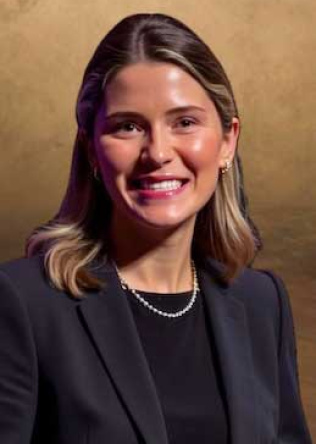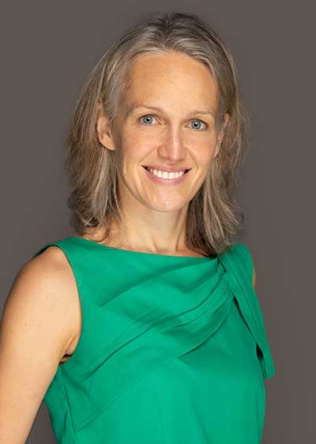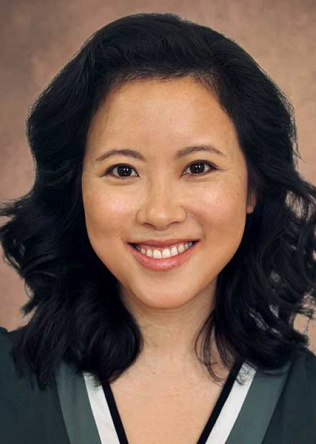
Amalie Chen, MD

Amalie
Chen
MD
Assistant Professor
General Neurology and Ophthalmology

Dr. Chen’s research focuses on neuro-ophthalmology, visual pathway disorders, and the neurologic mechanisms underlying visual dysfunction. Her scholarly work has included investigations of neuro-ophthalmic manifestations of neurologic and autoimmune disease, higher-order visual disorders, and imaging biomarkers in multiple sclerosis. She has authored peer-reviewed publications, book chapters, and review articles on topics ranging from optic neuropathies and eye movement disorders to advanced neuroimaging and immune-mediated neurologic disease. Through clinical and translational research, Dr. Chen seeks to improve the diagnosis and treatment of disorders at the intersection of neurology and ophthalmology.

Amalie Chen, MD, is an Assistant Professor of Clinical Neurology and Ophthalmology at Vanderbilt University Medical Center. Dr. Chen specializes in neuro-ophthalmology and cares for patients with neurologic conditions that affect vision, eye movements, and the visual pathways. She is board-certified in Neurology by the American Board of Psychiatry and Neurology and is a member of the North American Neuro-Ophthalmology Society.

Dr. Chen earned a Bachelor of Arts in Biology from the University of Pennsylvania and received her medical degree from Vanderbilt University School of Medicine. She completed her neurology residency at Mass General Brigham in Boston, MA and served as Chief Resident her senior year. She subsequently completed fellowship training in Neuro-Ophthalmology at Mass Eye and Ear and Brigham and Women’s Hospital.

Laura Donahue, MD

Laura
Donahue
MD
Assistant Professor
Sleep

Dr. Donahue’s research interests focus on improving healthcare quality while reducing the environmental impact of medical care. Her work has examined the life-cycle environmental effects of medical devices, surgical supplies, physician travel, pharmacy operations, and other healthcare practices. In addition, she has participated in clinical and translational research spanning neuroscience, psychiatry, and sleep medicine. Through her research, Dr. Donahue seeks to identify practical strategies that support high-quality patient care while promoting efficient and responsible use of healthcare resources.

Laura M. Donahue, MD, is an Assistant Professor of Neurology in the Department of Neurology at Vanderbilt University Medical Center. Dr. Donahue's clinical interests include the evaluation and treatment of sleep disorders and the application of evidence-based approaches to improve patient care and health outcomes. She is a member of the American Academy of Sleep Medicine, the American College of Physicians, and the Alpha Omega Alpha Honor Medical Society.

Dr. Donahue has received several honors recognizing her academic achievement, leadership, and commitment to patient care, including election to the Alpha Omega Alpha Honor Society, the Department of Medicine Senior Scholarship Award from the University of Michigan Medical School, the Emerging Physician Leadership Award from the Healthcare Without Harm Physician Network, and the Northwestern University Department of Medicine Resident Teaching Award. Her scholarly work has focused on clinical research, healthcare sustainability, and quality improvement, resulting in multiple peer-reviewed publications and national presentations.

Dr. Donahue earned a Bachelor of Science in Cellular and Molecular Biology with Highest Distinction from the University of Michigan and received her medical degree from the University of Michigan Medical School. She completed her internship and residency in Internal Medicine at McGaw Medical Center of Northwestern University, where she was recognized for her excellence in teaching and leadership. Prior to pursuing Sleep Medicine fellowship training, she served as a Hospital Medicine attending physician at the University of Chicago.

Laura Dresser, MD

Laura
Dresser
MD
Assistant Professor
General Neurology

Dr. Dresser’s research focuses on autoimmune and inflammatory diseases of the nervous system, including multiple sclerosis, neuromyelitis optica spectrum disorder, and myasthenia gravis. Her work has examined treatment effectiveness, therapeutic safety, and long-term outcomes in patients receiving immunomodulatory therapies. She also has interests in women’s neurology and the management of neurologic disease during pregnancy and other hormonally influenced stages of life. Through clinical research and patient-centered investigation, Dr. Dresser seeks to improve treatment strategies and quality of care for individuals living with neuroimmunologic disorders.

Laura P. Dresser, MD, is an Assistant Professor of Clinical Neurology in the Department of Neurology at Vanderbilt University Medical Center. Dr. Dresser specializes in neuroimmunology and multiple sclerosis and cares for patients with multiple sclerosis, neuromyelitis optica spectrum disorder, myasthenia gravis, and other autoimmune neurologic conditions. She is a member of the Department of Neurology’s Women’s Neurology Group and has a particular interest in neurologic conditions affecting women across the lifespan.

Dr. Dresser has contributed to clinical and translational research in neuroimmunology, women’s neurology, and neurologic autoimmune diseases. Her scholarly work includes investigations of treatment outcomes in neuromyelitis optica spectrum disorder, multiple sclerosis therapies, myasthenia gravis, and neurologic disorders in pregnancy. She has authored numerous peer-reviewed publications and presented her work at national meetings, including the American Academy of Neurology and the Americas Committee for Treatment and Research in Multiple Sclerosis (ACTRIMS).

Dr. Dresser earned her medical degree from Rosario University School of Medicine and Health Sciences in Bogotá, Colombia. She completed an internship in Internal Medicine at NorthShore University HealthSystem–University of Chicago, followed by a Neurology residency at the University of Chicago Medical Center. During her residency, she also completed fellowship training at the MacLean Center for Clinical Medical Ethics. She subsequently completed fellowships in Multiple Sclerosis and Neuroimmunology at the University of Chicago Medical Center and Women’s Neurology at the University of Pittsburgh Medical Center. Prior to joining Vanderbilt in 2025, Dr. Dresser practiced as a neurologist at the MS & Neuromuscular Center of Excellence and Mease Countryside and Mease Dunedin Hospitals in Florida.

Molly Louderback, PA-C

Molly
Louderback
PA-C
Physician Assistant
General Neurology

Molly Louderback, PA-C, is a Physician Assistant specializing in neurology with expertise in the diagnosis and management of a broad spectrum of neurologic disorders. She provides comprehensive care for patients with conditions including headache disorders, facial pain disorders, migraine, neuropathic disorders, stroke, transient ischemic attack, cerebrovascular disease, seizure disorders, and memory changes.

Ms. Louderback practices with Vanderbilt Health, where she conducts comprehensive neurologic evaluations, develops individualized treatment plans, and provides ongoing management for patients. Her clinical practice includes neurotoxin injections for chronic migraine and skin biopsies for suspected small fiber neuropathy.

She works closely with multidisciplinary team to coordinate patient care. She also plays an active role in patient and caregiver education, helping individuals understand disease progression, treatment options, and symptom management strategies.

Ms. Louderback earned a Bachelor of Arts in Biology with a co-major in Neuroscience from Miami University and completed a Master of Science in Medicine in Physician Assistant Studies at Trevecca Nazarene University.

John Wahba, MSN, FNP-C

John
Wahba
MSN, FNP-C
Nurse Practitioner
Sleep

John Wahba is a Family Nurse Practitioner in the Department of Neurology at Vanderbilt University Medical Center, specializing in Sleep Medicine since 2025.

He has more than ten years of advanced practice experience providing comprehensive care in primary care. He is bilingual in English and Arabic and incorporates a culturally responsive, patient-centered approach into his clinical practice.

He earned a Master of Science in Nursing from Vanderbilt University in 2016 and maintains certification as a Family Nurse Practitioner through the American Academy of Nurse Practitioners. He maintains active licensure as an Advanced Practice Registered Nurse in Tennessee and Kentucky.

Jessica Bledsoe, MSN, APRN, FNP-BC

Jessica
Bledsoe
MSN, APRN, FNP-BC
Nurse Practitioner
Sleep

Jessica Bledsoe is a Family Nurse Practitioner practicing Sleep Medicine at Vanderbilt University Medical Center. She assists in both the Neurology and Pulmonology Sleep Medicine Clinics. She has been practicing as a Family Nurse Practitioner since 2019. She received her Bachelor of Science in Nursing at the University of North Carolina at Wilmington and her Master of Science in Nursing at Vanderbilt University.

Nicole Recinos, PA-C

Nicole
Recinos
PA-C
Physician Assistant
General Neurology

Nicole Recinos is a physician assistant in the outpatient general neurology and stroke clinics in the Department of Neurology at Vanderbilt University Medical Center.

Prior to her current position, Nicole practiced in both orthopaedic spine and pain management settings. She earned a Bachelor of Science in Health Science with a minor in Chemistry from Southern Adventist University. She subsequently completed a Master of Physician Assistant Studies at Kettering College of Medical Arts.

Anna Pfalzer, PhD, MS

Anna
Pfalzer
Research Assistant Professor
Movement

Dr. Anna C. Pfalzer is a Research Assistant Professor of Neurology at Vanderbilt University Medical Center and an Adjunct Assistant Professor of Neuroscience, where her research focuses on identifying early biomarkers of neurodevelopmental and neurodegenerative disorders, with a particular emphasis on rare, genetic conditions. Her early work examined cognitive and molecular changes in children at risk for Huntington's Disease, identifying plasma-based biomarkers that appear decades before clinical onset, which led to a broader interest in shared proteomic and metabolomic signatures across neurodevelopmental disorders, and she now leads biomarker discovery efforts involving multi-omics analyses across more than 35 rare, genetic neurodevelopmental conditions, collaborating closely with patient advocacy foundations.

Carolyn Cronin, MD, PhD

Carolyn
Cronin
Professor
Vascular
Division Chief, Vascular
Vice Chair
Education

Carolyn Cronin, MD, PhD is an Associate Professor of Neurology at Vanderbilt and serves as the Vascular Neurology Division Chief and the Vice Chair for Education in the Department of Neurology and the Stroke Medical Director for the Vanderbilt Adult Hospital. Dr. Cronin is certified in Neurology and Vascular Neurology by the American Board of Psychiatry and Neurology. She practices in both the inpatient and outpatient settings caring for patients with stroke and other vascular neurology diseases.

Dr. Cronin attended medical school at the University of Virginia, where she also earned a PhD in neuroscience. She completed a neurology residency at Johns Hopkins and a vascular neurology fellowship at the University of Maryland Medical Center. She then joined the faculty of the stroke division in the department of neurology at the University of Maryland School of Medicine where she served as the vascular neurology fellowship director, the neurology residency program director, and the vice-chair for education in the department of neurology. Dr. Cronin joined the Vanderbilt department of neurology in 2025.

Dr. Cronin has been very involved in research aimed at improving stroke patient care and outcomes. She served as the local PI or co-investigator for many multi-center stroke studies, as well as multiple independent studies on stroke outcomes. Some themes of her research have included: optimizing patient selection for treatment with intravenous thrombolytic medication or intra-arterial embolectomy for acute ischemic stroke; racial differences in stroke risk factors among young adult stroke patients; optimizing stroke diagnosis including characterizing carotid webs and congenital bone abnormalities in patients with previously unknown cause of stroke.