Cancer Vaccines: Are We There Yet?

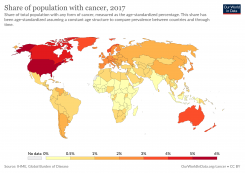
The concept of immunity has intrigued humankind for centuries. From prehistoric times when disease was viewed as a form of punishment for wrong deeds by supernatural forces, to Louis Pasteur’s germ theory of disease, the field of immunology has come a long way. Our immune system comprises of a network of unique cells like macrophages, dendritic cells, T, B and natural killer cells housed by different organs that work to protect us from invading pathogens like bacteria, fungi and viruses. These cells have evolved to identify and neutralize foreign pathogens and keep us healthy. Thumbnail: IHME, Global Burden of Disease. OurWorldInData.org/cancer... Click the image to continue reading.

A COVID-19 Vaccine: Why We Need It and How We Get There Yesterday

Vaccines are typically developed through a lengthy, rigorous process that averages 10-15 years from inception to approval. The goal is to create a vaccine that is safe and with good immunogenicity, meaning it stimulates a strong immune response, to generate antibodies which can neutralize an invading pathogen. Given the high infectivity of COVID-19, the vast percentage of the population susceptible to the virus, and the burden it places on the healthcare system, the economy, and our lives, we need a vaccine much sooner than the normal 10-15-year timeline. To achieve a safe and effective vaccine within a reasonable time frame, a massive research effort within academia and the pharmaceutical industry must be undertaken in collaboration with and funded by the United States government... Click the image to continue reading.

Ask a Scientist - Why is blood red?

Raven from Tennessee wants to know,, "Why is blood red?" Our volunteer expert and Research Assistant Professor in the department of Pharmacology, Matthew Duvernay, answers the question here! Click the image to the left to watch.

How does a mRNA vaccine compare to a traditional vaccine?

VI4 and the Vanderbilt Vaccine Research Program partnered to create this infographic, which outlines the key attributes of mRNA vaccines compared with traditional vaccines. This infographic aims to present the information in lay terms for the general public. Click the image to the left to learn more and to share with your social networks!

Postdoc Spotlight: Dudley McNitt, Ph.D.

Dudley McNitt, Ph.D. completed his undergraduate degree in Biology from University of Pittsburgh. He did his Ph.D. at West Virginia University in Immunology and Microbial Pathogenesis. Dudley is a Postdoctoral Research Fellow in the lab of James W. Thomas II, M.D... Click the image on the left to continue reading.

Ask a Scientist

Do you have a science question? Submit the question in the form below and we'll find the perfect expert at the Vanderbilt University Medical Center to answer it! Answers will be featured on the ImmuKnow+ homepage as well as the VI4 twitter account. Answers will be done in video form when possible so please allow a week or two for us to turn it around!

Faculty Spotlight: Julia K. Bohannon, Ph.D.

Dr. Bohannon completed her PhD at the University of Texas Medical Branch in Galveston, TX, where she began her studies into immune function following severe burn injury. After completing her PhD studies in 2011, she joined the Sherwood Lab at UTMB as a postdoctoral fellow. Shortly thereafter, she assisted Dr. Sherwood in relocating his laboratory to the Anesthesiology department at VUMC in 2012, where she completed her postdoctoral training. She joined Anesthesiology faculty in 2015 and now has her own research program aimed at investigating immunomodulatory therapies for the prevention of infection and sepsis in patients with severe burn and other critical injuries... Click Dr. Bohannon's photo to continue reading.

Image Feature: Colbie Chinowsky

This image is a W4 cell that has been treated with Blebbistatin, a myosin-2 inhibitor. Upon treatment with this inhibitor, we observed that the microvilli (actin-based protrusions that allow increased surface area for nutrient absorption in the intestine) elongate far beyond their usual length. These observations, combined with many others, led us to a mechanism called "contractility-dependent actin turnover", which has been observed in other systems, such as the neuronal growth cone. We believe that NM2C likely assists in actin turnover of microvilli, as we also found that NM2C is positioned directly underneath microvilli, in an optimal position to influence the microvillar actin network... Click the image to continue reading.

VI4 Growth

Since its inception, 3 years ago, the Vanderbilt Institute for Infection, Immunology, and Inflammation has grown to include 166 faculty and numerous postdocs, students, and staff working together to acquire substantial public and private research funds and to publish rigorous scientific manuscripts in top tier journals. This success stems from a dedicated community who now exist under a framework to maximize education, resources, and collaboration. Critical to meeting our mission is the ability to foster an environment for growth and continued collaboration with state-of-the-art equipment and resources. The VI4 is excited to announce a series of renovations, equipment, and new programs to continue to grow and serve the research community and become a world leader in Infection, Immunology, and Inflammation research... Click the image to continue reading.