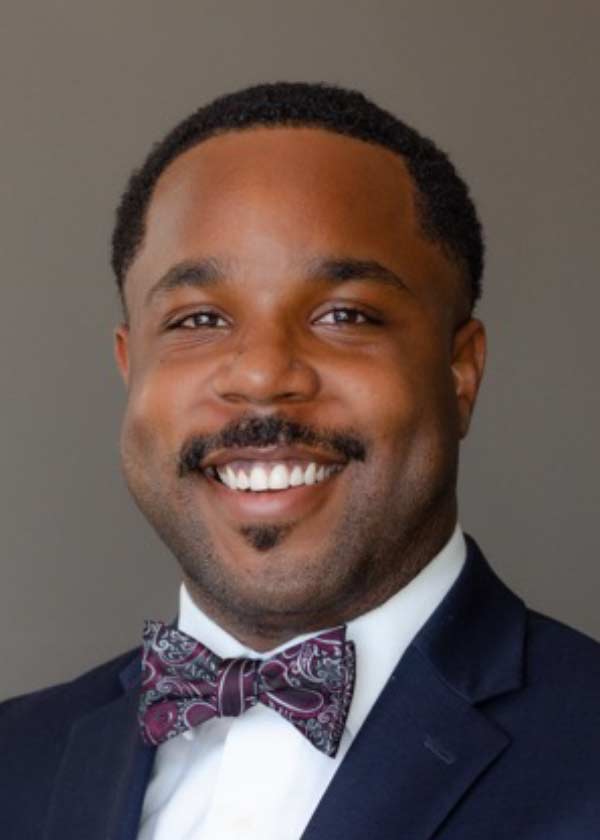
 Dr. Winston Bell
Class of 2027
While originally from Chattanooga, Dr. Winston Bell spent nearly a decade on the East Coast for school prior to returning to his home state for residency. Though he originally planned to pursue pediatrics, he became fascinated by stroke medicine during his training, particularly the acuity of care and its relationship to health equity. Jokingly known as the “Mayor of Vanderbilt,” Dr. Bell is often found catching up with colleagues from many different fields in the hallway or visiting Richland Park Farmer’s Market with his dog, Milo, in his downtime.
Tell us about your background and how your path led to medicine.
I’m originally from Chattanooga, Tennessee. My mom is an engineer, and my dad is a cardiologist, so I did have some exposure to medicine through his lens. I always like to mention that I am a fourth-generation college student, because this was not seen as common coming from an African American background. That set the framework for me that education was really an expectation more than anything. I attended UNC-Chapel Hill for undergrad, and I ended up going to Tufts University to get a Master’s degree in biomedical sciences and later returned for medical school.
In the background, I had already been working as a pharmacy technician in Chattanooga during breaks, which I did as a true gap year. This showed a different lens to health care and showed me that a $5 prescription before pay day is a “make or break” for a lot of people. It showed me the realities of a hometown county pharmacy.
What piqued your interest in Neurology?
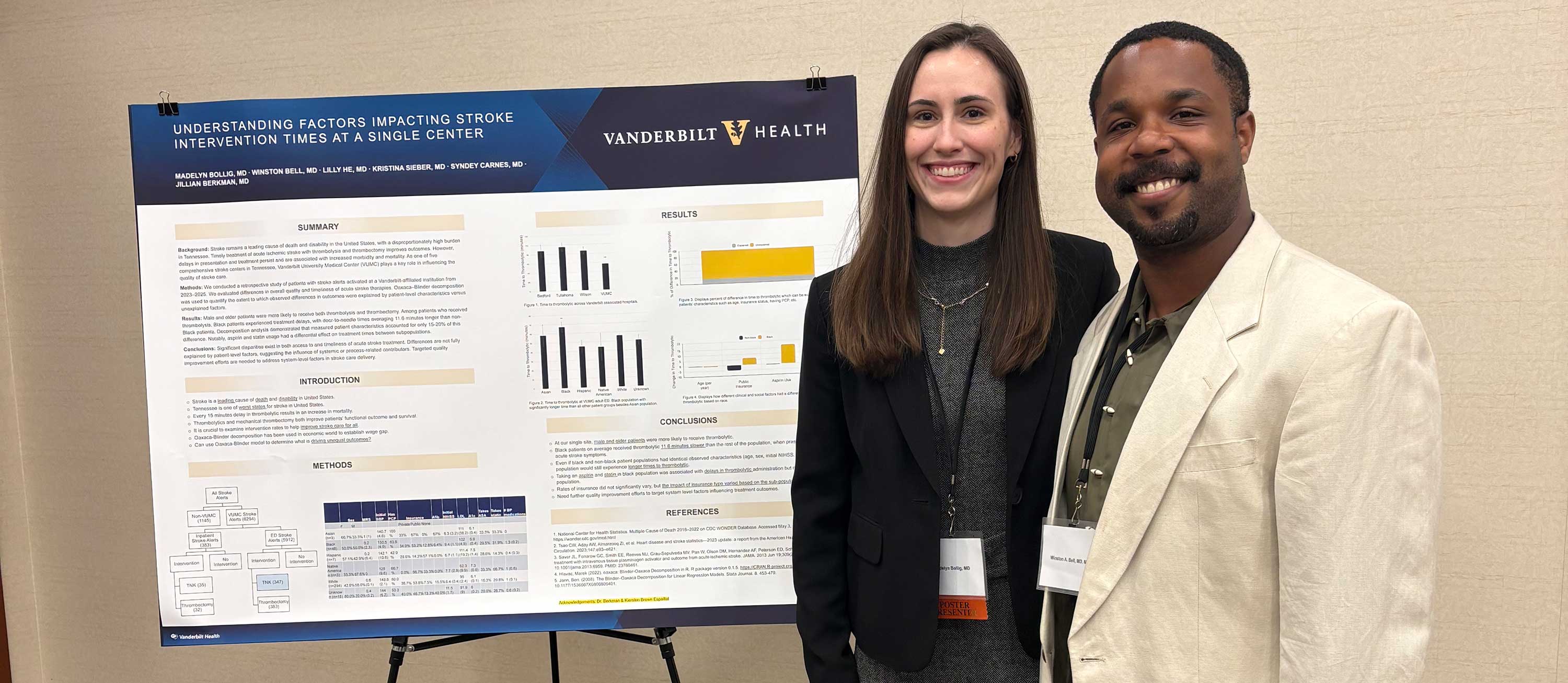
Initially my goal was pediatrics, with a GI specialty. That was the plan up until my fourth year of medical school. I had always said I never wanted to work with adults or do acute medicine, because I thought it stressed me out. Now I am an adult neurology resident and it turns out I love stroke neurology! One day in medical school, I recall seeing a specific stroke alert where clot removal occurred, and the patient returned back to their baseline. I remember saying, “Whoa that was cool!” I thought the exam was so interesting because it shows you where the problem is–I also realized I just love the older population. In some ways it’s very similar to a pediatrics population, but they can speak for themselves and their goals of care are a little more clear. So it became a major shift to adult neurology, specifically stroke.
What I really learned about myself—when there are times when medication doesn’t work and you can’t pull the clot, when things aren’t going the way you want—I can be the person to help hold their hand. I realized I get a lot of joy and peace acting as a patient’s defender when they have none. Stroke medicine also still has an equity focus, so it included all the things that got me into medicine in the first place, but with a completely different population than I had foreseen.
What attracted you to Vanderbilt for residency?
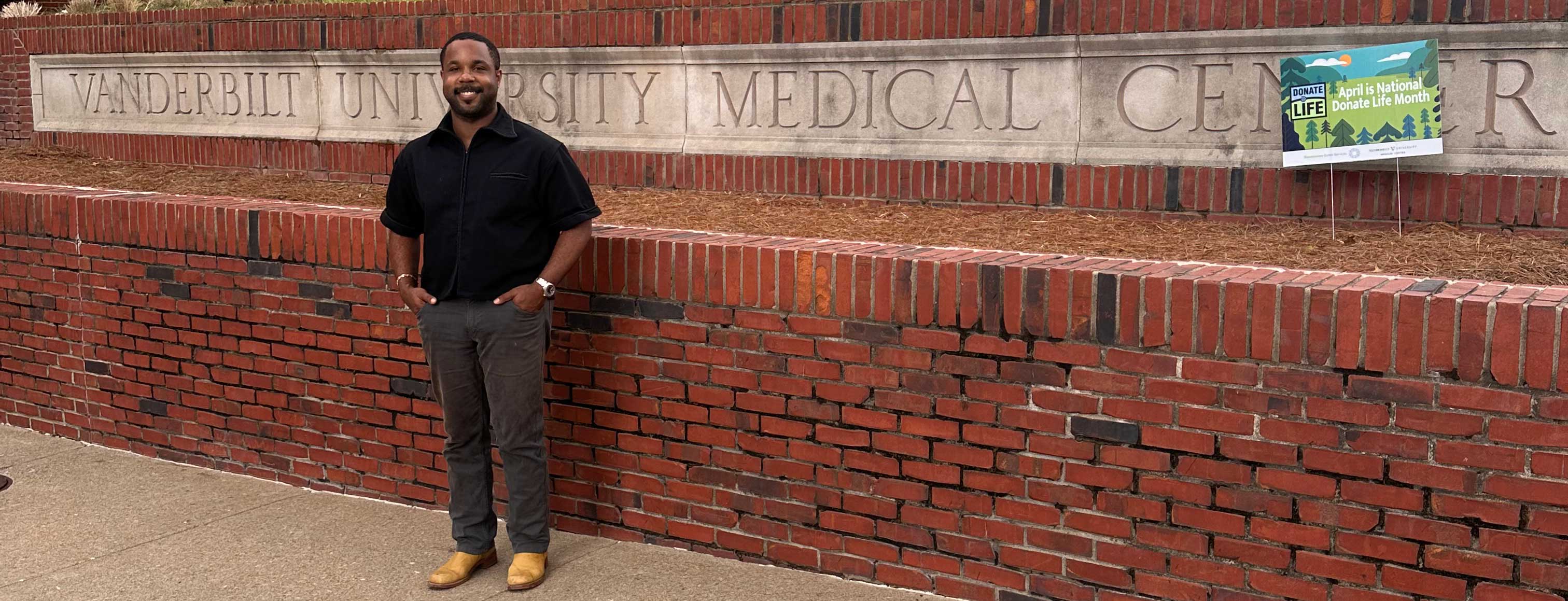
Funny enough, I didn’t even think about Vanderbilt for undergrad because I said I wanted to get away from home! But I'll never forget looking at my parents one day when they came and visited me–because at that point I had been gone for almost a decade–and saying, “I really miss you and I want to be close to you!”
What I cared most about [in choosing a residency program] was a high-volume institution in the South. I visited my top three residency choices and sat down with someone at every program, but when I met with the person here at Vanderbilt we sat at the Panera and just talked for three hours. It was just so fluid and smooth and not by any means an interview. It was literally just getting to know each other. I remember walking away and saying “this feels right and I can see myself here.” And that wasn’t the case everywhere else.
What have been some highlights of residency so far?
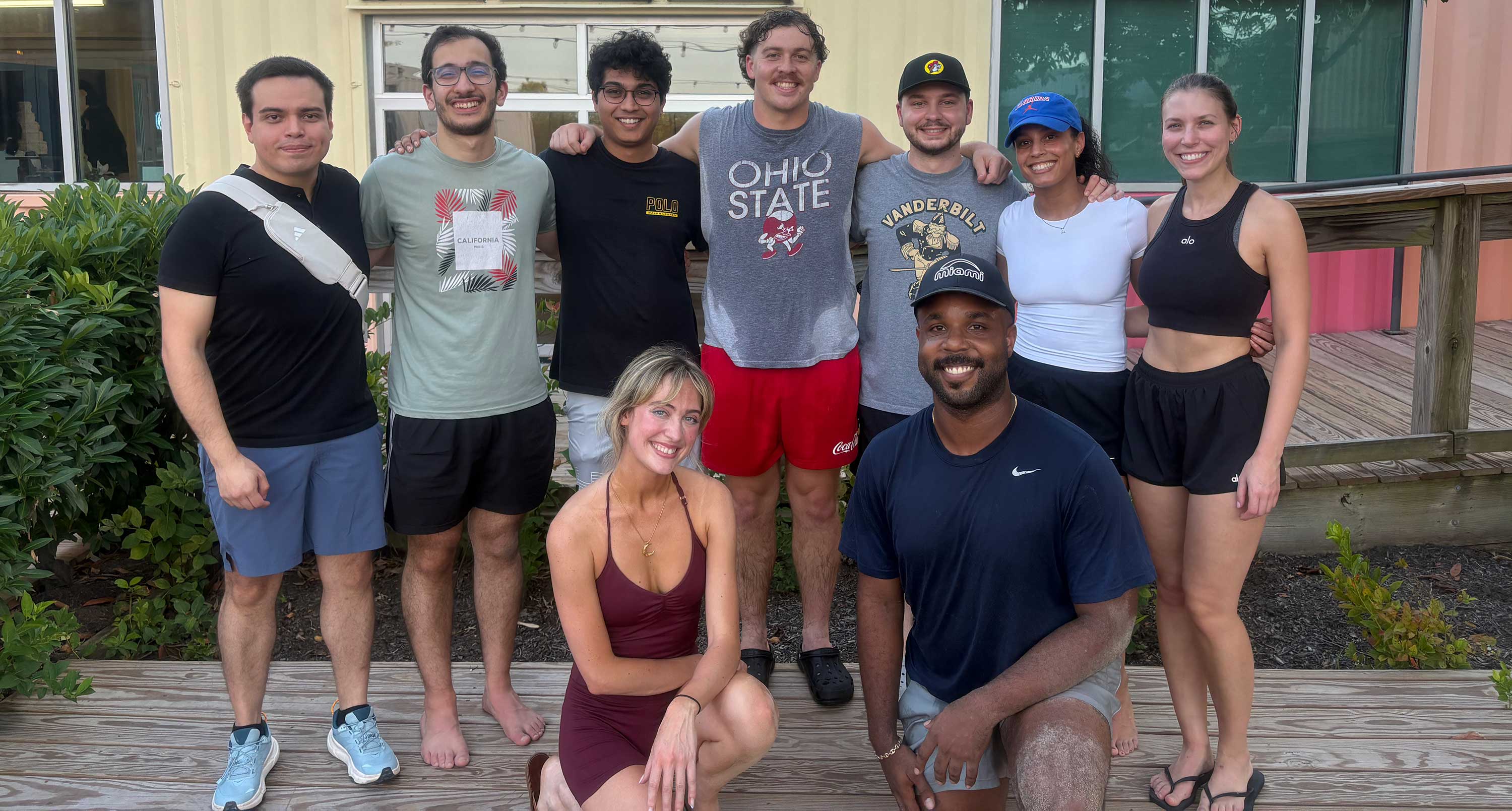
One thing is that our program director is just phenomenal. I can reach out for anything at any time. That always feels good to have someone so easily accessible. Another thing is that I love who I work with. People love to say that I’m the “Mayor of Vanderbilt.” As introverted as I am at home, I have to admit I do know a lot of people who walk through the halls. From the cleaning staff, to the people at Suzie’s making the coffee to attendings and coresidents, I feel like everyone wants to have a friendship.
Another thing I love is that all of our facilities are one campus. I came from a commuting space and I hated it. There’s a lot of things to love here. It’s not only the people but the space, and how human it feels here. We do the most heart transplants in the Southeast, but I don’t feel like I’m in an elitist environment.
What about challenges? What has helped you face any obstacles along the way?
I have a tendency to get emotionally connected to my patients. So when things go south or you lose someone–even if it’s what they would have wanted–it can be heavy, especially if the volume of loss in a week is high. It can be hard sometimes. But on the flip side I feel like I can always honor my feelings here. I don’t always feel like I need to leave the room if I need to take a moment to cry. It’s nice to be able to say it outloud, no matter how hard that is.
Our intern year is extremely challenging. Another challenge is our increasing volume of patients and consults, especially overnight. But although that might be a hard thing to navigate, it also makes you efficient at triaging quickly and efficiently. I feel comfortable tackling those things, but it’s learned through the fire.
But again, here at Vanderbilt, I find that when we target these things that we’re seeing as an issue, we’re often finding a fix. I always feel like I'm heard in this program. When the residents express something that was especially difficult for them, that issue is often addressed for future residents.
What are your plans after residency?
I’m staying here at Vanderbilt for a stroke fellowship. Afterwards, my hopes are to stay on as faculty. What I would love to do is to work here, a nearby community hospital, and possibly the VA. Another thing I would love to do more of is treatment for spasticity post-stroke. It’s something we already do here, but I’d love to take that even further than what we’ve seen.
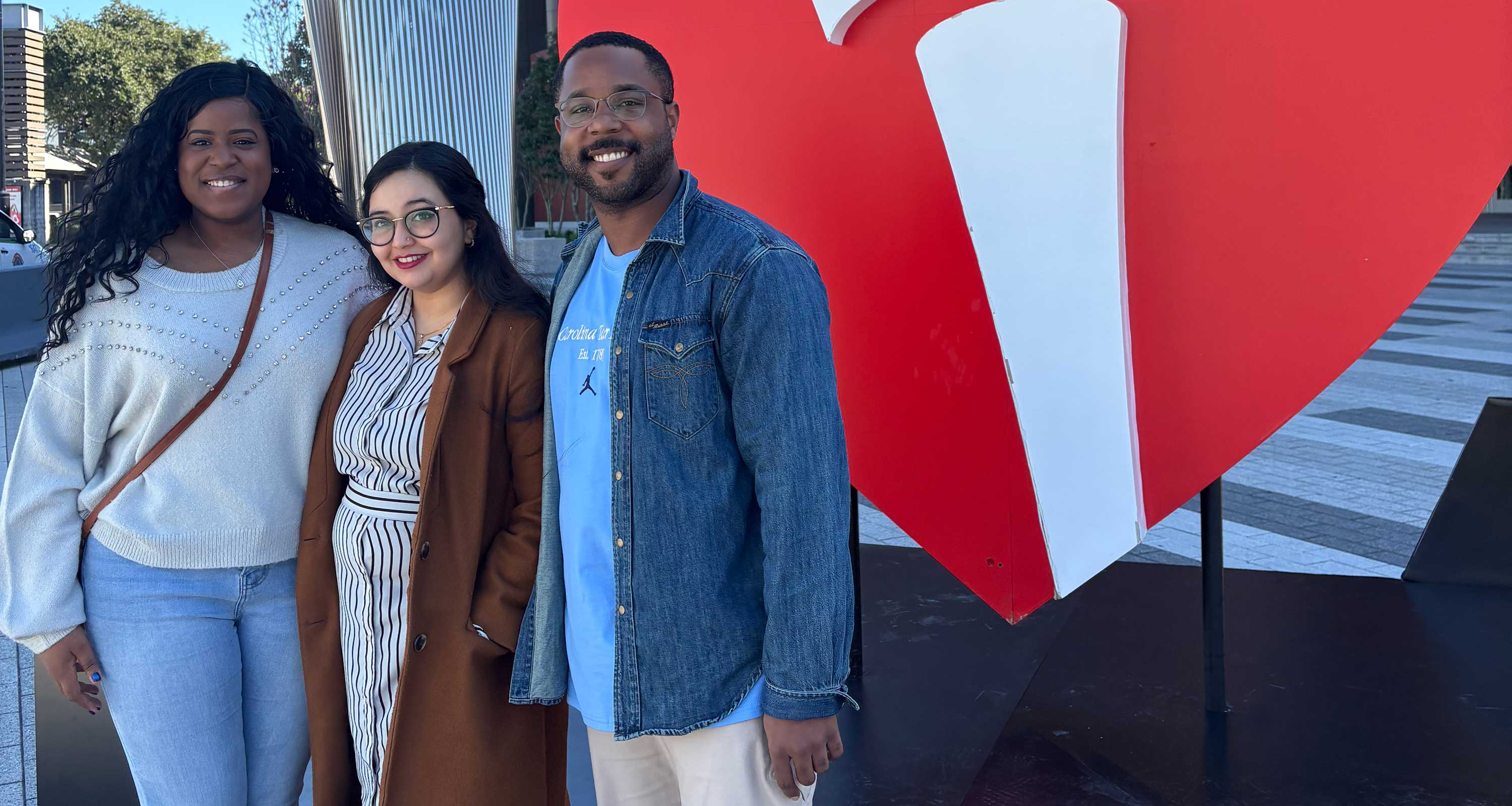
How do you spend your free time? What does an open weekend look like for you?
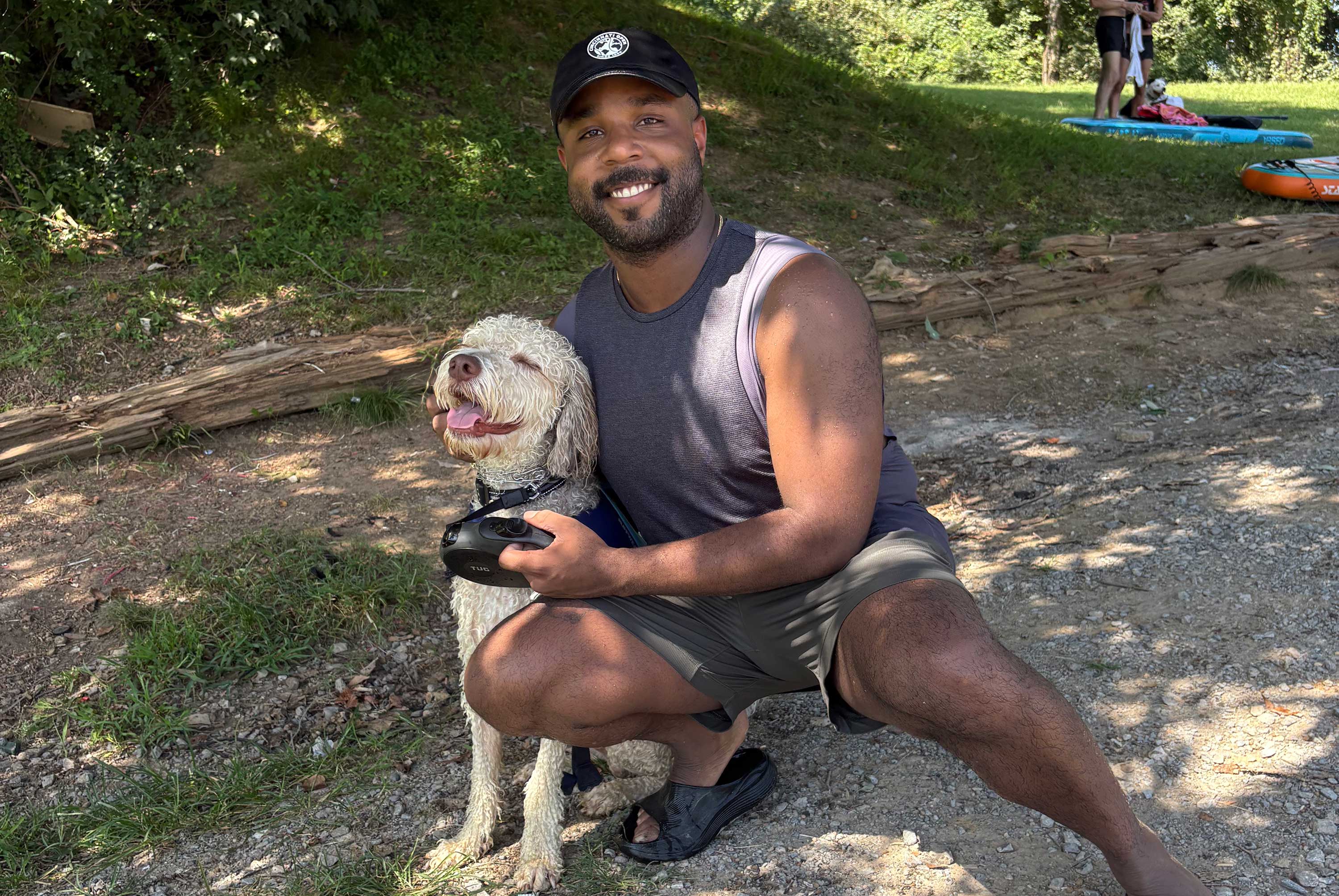
If I’m off on Saturdays, I’m at Richland Park Farmer’s Market. I love the routine, seeing the people, and getting the same few things. My girlfriend and I both got into pottery together. We both did it back in middle school, funny enough. After a date night, we both picked it up again and now we love pottery. We have a dog, Milo. We’re always just trying to show him the world. I often take him on a walk or hike, or head to an area with water where we let him swim. If the weather's not terrible, we love to get out and play tennis.
What are your favorite restaurants?
I love Sadie’s in Edgehill, but I think I’m partial because it’s close to me and easy. I love this other place in Wedgewood-Houston called Iggy’s. It’s an Italian restaurant with great food, great drinks, and the best soft serve in the city. The other place we’ve been trying to get back to is Pelato in Germantown.
What would you be doing if you were not a neurologist?
I would be a chef. I always joke that I think I picked the easier job! When I look at the statistics, the success rate for chefs is low, and they have to work every holiday–at least I only have to work some of them! My retirement goal is to have a little shack near a beachside town and sell food, just on a small scale and being locally known.
Do you cook often?
Yes, we joke that I’m the chef in the home. I’m currently on a grilling kick. Normally my go-tos are steak, fish, or pasta. But now that we’re grilling, it’s steak, fish, or chicken wings because I’m just loving being out there.