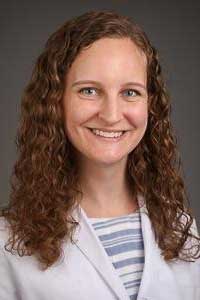
Amanda Currie, MD
Amanda D. Currie, MD, is an Assistant Professor of Neurology in the Department of Neurology at Vanderbilt University Medical Center. Dr. Currie specializes in movement disorders and cares for patients with Parkinson’s disease, dystonia, Tourette syndrome, and other complex movement disorders. Her clinical practice includes movement disorders clinics, botulinum toxin injection therapy, deep brain stimulation (DBS) programming, and participation in Vanderbilt’s Undiagnosed Diseases Program. She is board-certified by the American Board of Psychiatry and Neurology and is a member of the American Academy of Neurology and the International Parkinson and Movement Disorder Society.
Dr. Currie has been actively involved in academic neurology through teaching, research, and professional service. She has delivered national lectures on neurotoxin injection techniques and genetic testing for movement disorders and has served as an ad hoc reviewer for several neurology journals. Her scholarly work has focused on movement disorders, deep brain stimulation, Parkinson’s disease, dystonia, and spasticity, resulting in numerous peer-reviewed publications, book chapters, and scientific presentations. She has also contributed to multidisciplinary research examining patient selection, outcomes, and emerging therapies for movement disorders.
Dr. Currie earned a Bachelor of Arts in Neuroscience Studies, summa cum laude, from Macalester College. She received her medical degree from the University of Tennessee College of Medicine and completed both her internship in Internal Medicine and Neurology residency at Duke University. She subsequently completed fellowship training in Movement Disorders at the University of Florida, where she also served as Education Chief for the fellowship program. Dr. Currie joined the Vanderbilt faculty in 2025.
Research Information
Dr. Currie’s research focuses on improving the diagnosis and treatment of movement disorders, including Parkinson’s disease, dystonia, Tourette syndrome, and atypical parkinsonian disorders. Her work has examined the clinical outcomes of deep brain stimulation, patient selection for neuromodulation therapies, and the development of multidisciplinary approaches to the care of individuals with movement disorders. She has also contributed to studies evaluating novel therapeutics, biomarker development, gene therapy, and emerging technologies for Parkinson’s disease and related conditions. Through participation in clinical trials and translational research programs, Dr. Currie seeks to advance therapeutic options and improve quality of life for patients living with neurologic movement disorders.