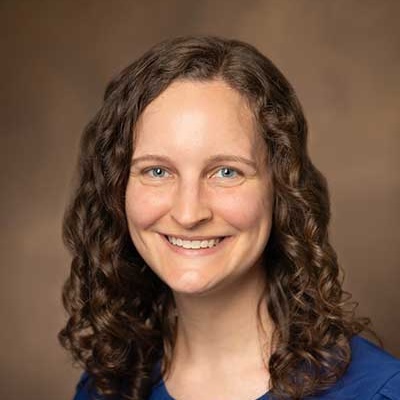
Amanda Currie, MD
Assistant Professor
Dr. Amanda Currie’s passion for neurology and movement disorders stems from her love of working with patients and an inspiring conversation with the Dalai Lama. Spending time getting to know patients in the clinic and following up with them over time has become a highlight of her work, which actually began at Vanderbilt in the summer after high school. In her free time, she tries to practice what she preaches to her patients by exercising, as well as exploring Nashville festivals and new crochet projects.
Tell us about your background and how your path led to Vanderbilt.
It’s a bit of a funny story because there wasn’t much prior to Vanderbilt for me–I was born at Vanderbilt Hospital! I grew up here in Nashville, and I lived here until I left for college. For undergrad, I attended a little liberal arts school in Minnesota called Macalester College. I had started working in Dr. David Charles’ Movement Disorders lab the summer after I graduated high school, and I went back to work in the lab every summer throughout college. I took a gap year between college and medical school, and during that time I worked full-time as a research assistant with Dr. Charles.
I went on to the University of Tennessee in Memphis for medical school, followed by neurology residency at Duke. I then completed a two-year Movement Disorders fellowship at the University of Florida in Gainesville before coming back here to Vanderbilt.
What made you want to return to Vanderbilt after your training?
I really feel fortunate to work with the people here. I have the best coworkers. I am continually inspired and impressed by their expertise and clinical care, and I’m truly honored to be part of their team. I feel supported by them, and I feel free to bounce ideas off of them. I feel very privileged to come back to work here, especially since it’s a real full circle experience for me. I love Nashville, and I’m happy to be back close to friends and family.
How did your career path lead to neurology, and ultimately movement disorders?
I always liked to take care of people and saw medicine as a fitting way to do that. Once I was listening to a podcast, and the interviewee was discussing how the brain mediates the mind, which is a topic that has always resonated with me. I can’t point to a single thing, but I first got interested in neuroscience during high school, and that was my major in college. So I spent four years dedicated to studying how the brain works! I had a particularly inspiring experience in my senior year of college. The Dalai Lama was coming to speak at our school, and the graduating seniors who were majoring in neuroscience were invited to have a private audience with him. During our time together, he talked about his fascination and admiration of the nervous system, but he told us that simply studying it is insufficient. He emphasized that we need to use that knowledge to improve others’ lives, and I thought that neurology was the perfect way to put that into practice. In medical school, when it came time to choose a specialty, an advisor said, “choose a specialty you could read about every day without getting bored.” And again, that was neurology. The brain is so central to how we experience the world, and neurology is a unique specialty in the sense that we can help people improve their experience with the world.
As for Movement Disorders, I like that in this subspecialty we can learn so much from the physical exam and simply spending time with our patients. By spending a few minutes in the room with a patient, we learn so much about what matters to them and how to help them. There are also so many different treatments we can offer them. With so much research going on, every time I open a new journal there’s always a new DBS [deep brain stimulation] discovery, new medication, or a different approach to how we can treat people, and that part really excites me too.
What do you consider some of the highlights of your job?
Working with patients is the highlight for me. I feel privileged that patients will allow me into their health journeys. I love following up with people after I make a recommendation and seeing that they now get to do more of the things they love. That’s very rewarding to me. It’s always an unforgettable moment for me when I’m programming a DBS for the first time. For example, if I’m working with someone whose hand is shaking so badly that they haven’t been able to write, I turn the DBS on, do some programming, and they can sign their name for the first time in decades. That never gets old–I get a little misty-eyed.
What have been some of the obstacles you've had to face along the way? What helps you face those challenges?
I am an introverted person, and that can be somewhat of a challenge at times. I remember in residency I was talking to one of my senior residents about it; I had the feeling that I needed to be more extroverted. She recommended I read the book Quiet by Susan Cain. It’s outstanding and highlights the power of being an introvert in an extrovert’s world. I learned that observing and listening are great skills that can make me a better doctor. So often people just want to be heard and listened to, and that in itself can be very therapeutic.
As far as dealing with challenges that arise, I like to reach out to friends and family to see if others have had a similar experience and lean on their wisdom. Sometimes just knowing someone else has experienced something similar can be comforting.
Are you currently involved in any research?
Right now I’m interested in the clinical research side of things. I’m trying to bring new and innovative therapies to the bedside of patients, and to get involved in any clinical trials that I can. Some of our current trials are investigating a new drug for Tourette Syndrome, a new drug for cervical dystonia, and a couple of observational trials.
How do you like to spend your free time?
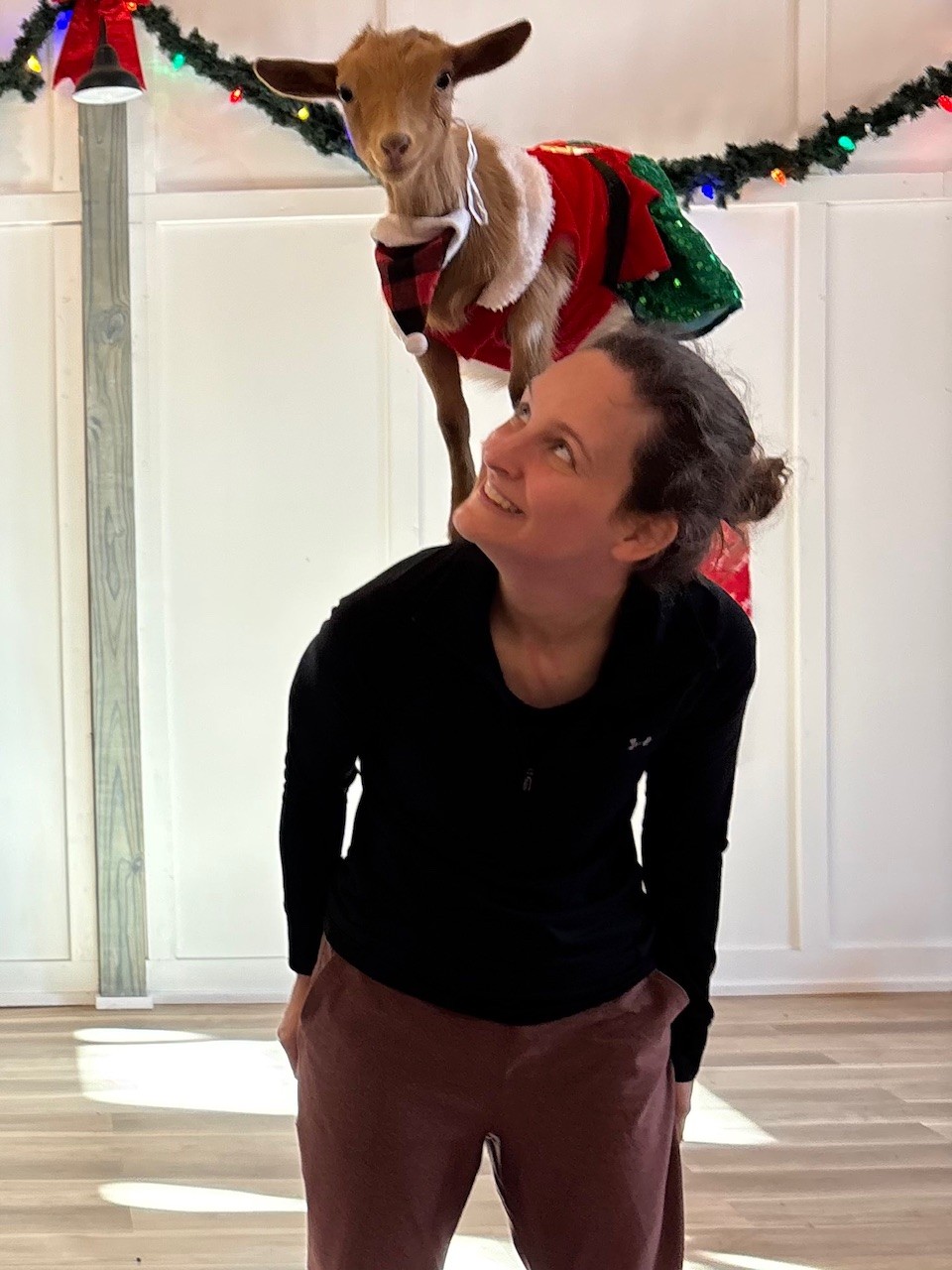
I try to do something active as much as I can, especially on the weekend. I talk to almost all of my patients about the importance of exercise, but I understand it’s easier said than done! That said, I like yoga. I just registered for the Tomato Fest 5K, so I will start training for that soon.
There are so many festivals and activities Nashville has to offer. There’s always something going on, and I love that about this city. But as much as I like to spend time in Nashville, I also like to travel. I recently got back from a family trip to Mexico City, and that was a blast!
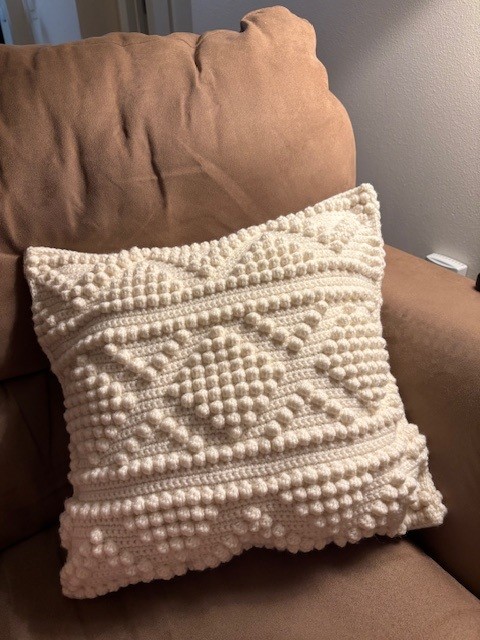
I’ve also been doing crochet for twenty-plus years. That’s a good relaxing, decompressing thing for me. I’m making a basket now that I’m making from recycled T-shirts, and I recently made a couple of pillow covers. Another recent project was making baby Gators for my colleagues and advisors in Florida after fellowship.
Are you currently reading any books or listening to any podcasts?
I do listen to some work-related podcasts, which help me keep track of new developments in the field. Some podcasts are update-focused, while others get to know the people behind the science, which I enjoy. I’ve also been listening to this fun podcast where these two people (one is an actor, the other is a comedian) host and people call in with their problems and they give them advice. It’s called “We’re Here to Help”. They’re totally unqualified, but they have lots of humor and it’s fun to listen to them work through things. One of my favorite episodes is about a man who calls in because a duck at his apartment complex imprinted on him, and he needs advice on how to make the duck leave him alone. Laughter can be great medicine, too!