Program Overview
Our Urologic Oncology Fellowship provides comprehensive training in the evaluation and management of urologic malignancies, as well as the tools to evaluate and contribute to the research in this field. Fellows complete a clinical year followed by a research year.
Fellows acquire advanced expertise in the multidisciplinary management of urologic cancers, including the ability to apply the critical principles of:
- Radiation oncology
- Medical oncology
- Urologic imaging
- Pathology
- Advanced understanding of the biology of urologic malignancies through clinical experiences and self-directed learning
The Urologic Oncology curriculum
Research endeavors, including learning:
- Study design
- Biostatistics
- Clinical trials
- Data analysis
- Scientific methodology
- Laboratory research
We adhere to the same goals as the SUO accrediting body, including teaching our fellows:
- To manage a clinical practice
- To participate in continuing education
- To collaborate in translational research
- Skills for self-education
Goals and Objectives
The mission of the Urologic Oncology program at Vanderbilt Health is to provide a comprehensive and broad range of experience in the medical and surgical management of urologic cancers. This experience is enhanced by gaining understanding of cancer care through clinical, translational, health services and/or basic science research. We offer a challenging program of advanced urologic oncology cases that prepare the fellow for practice in an academic or private practice setting. We prepare the fellow for leadership in our field through exposure with leaders in the Society of Urologic Oncology. We also aim to provide an environment for the fellows that supports patient safety, cutting edge clinical care, top notch education, and well-being.
Conferences and Workshops
At Vanderbilt, fellows participate in multiple conferences and attend association and professional workshops and meetings.
Conference schedule:
- Radiographic Case Discussion
- Department meeting
- Journal Club
- Research meeting
- Multidisciplinary Tumor Board (Wednesdays)
- Bi-Monthly Oncology Conference
- Research Updates
- Didactic conference (Fridays)
- Pathology conference
These conferences provide a framework for learning the biology of urologic cancers and a stimulus for research investigation.
Workshops/courses/meetings:
- American Association for Cancer Research Molecular Biology in Clinical Oncology Workshop
- Biostatistics (MPH course)
- Society of Urologic Oncology
- Southeastern Section of the American Urological Association (SESAUA)
- AUA meetings
- Genitourinary Cancers Symposium-American Society of Clinical Oncology (ASCO)
- ASCO meetings
Clinical Program
First-year fellows dedicate their time to clinical training and the development of surgical skills and clinical acumen. Fellows spend three days a week in a surgical setting and one and a half days each week in the clinic, learning the intricacies of the multidisciplinary management of urologic cancers.
Intensive surgical training includes hands-on experience in:
- Open surgery
- Laparoscopy
- Robotic surgery
- Energy-ablative and image-guided techniques
The team approach has always been emphasized at Vanderbilt. As a result, there is extensive and close interaction with residents, medical students, and co-fellows. Shared learning as well as independent experiences are promoted and supported.
After Jan. 1 of the first fellowship year, fellows earn:
- Faculty appointment
- Opportunity to book, identify your own cases and have your own clinic time (once/month)
Research Program
The second year is dedicated to impacting the field of urologic oncology through mentored research opportunities. Under the guidance of Jeffrey Tosoian, MD, MPH, our fellows are supported in leading impactful research across several domains.
Pathways include:
- Health services / outcomes research
- Translational cancer research
- Leadership in healthcare policy and delivery
The health services research pathway builds upon the foundational efforts of David Penson, MD, MPH, MMHC and Daniel Barocas, MD, MPH in establishing and maintaining the Comparative Effectiveness Analysis of Surgery and Radiation (CEASAR) study. The CEASAR study uniquely focused on patient-reported outcomes (PROs) rather than physician-reported complications, thereby fundamentally changing how we compare prostate cancer treatments. Under the mentorship of Drs. Penson and Barocas, health services research has long been a bedrock of our clinical research program, with multiple fellows producing high-impact publications during their research year. Building on this foundation, Daniel Joyce, MD, MS brings a complementary focus on the economic and financial dimensions of GU cancer care. Dr. Joyce's research applies decision-analytic and cost-effectiveness methods to evaluate the value of novel diagnostics, therapeutics, and care delivery models across bladder, prostate, kidney, and testicular cancer, with particular attention to financial toxicity and out-of-pocket cost burden. Fellows working with Dr. Joyce have the opportunity to contribute to ongoing projects centered on the cost and value of GU cancer care, including efforts to bring price transparency to the point of care and cost-effectiveness analyses—such as those leveraging the CEASAR cohort—that pair patient-reported outcomes with cost data to evaluate the long-term value of treatment strategies.
The clinical/translational research pathway aims to translate scientific discoveries into diagnostic, therapeutic, and other real-world applications to improve patient care. As chair of the National Cancer Institute – Early Detection Research Network’s GU cancer consortium, Dr. Tosoian’s work has focused on the development and validation of novel tools for prostate cancer diagnosis and monitoring. Available to our fellows, this pathway has yielded several high-impact publications and resulted in clinical adoption of at least one guideline-endorsed diagnostic test.
The leadership in health care policy and delivery pathway is led by Ruchika Talwar, MD, MMHC and CJ Stimson, MD, JD, who serve in hybrid clinical and leadership roles at Vanderbilt Health. This pathway provides unique opportunities for fellows interested in health care policy, health care delivery and payment transformation, national advocacy and value-based care. Through policy-oriented research or strategy and operations preceptorships, we guide fellows in laying the foundation for a career at the intersection of clinical care, health care policy, and health care administration. For interested fellows, a formal “Leadership in Healthcare Delivery” (LEAD) track provides a structured curriculum culminating in a capstone project centered on quality, value, or clinical care delivery.
Given the diverse expertise of our faculty, the opportunities extend beyond those above, and several of our faculty lead innovative clinical trials.
For those interested, the fellowship experience has also included a Master’s degree in Public Health, Science in Clinical Investigation, Business Administration and other advanced degrees.
Facilities
Fellows work and learn in multiple Vanderbilt facilities, including:
- Division of Urologic Oncology labs
- Vanderbilt University Medical Center
- Vanderbilt-Ingram Cancer Center
- Veterans Affairs Medical Center
- Center for Surgical Quality and Outcomes Research
Global Health
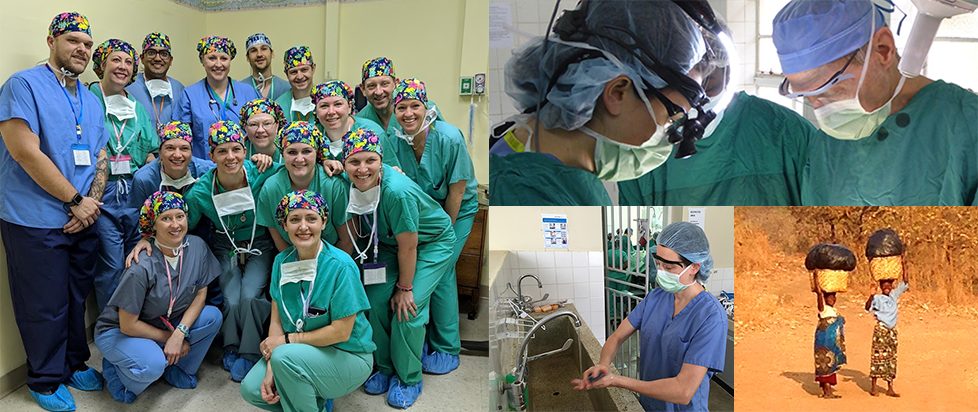
Global health missions are available for fellows who are interested. Faculty member Kelvin Moses, MD, PhD, leads global health efforts including trips to Rwanda, Uganda, Malawi and Liberia to train doctors there in urologic procedures and to provide care for residents who need it.
Fellows plan and design each trip, look for research opportunities and gain experience in teaching and learning from others. Our Global Health missions expose fellows to:
- Global surgery
- Experience in continually giving back
- Creatively innovating to find surgical and care solutions
- Working with others from varied backgrounds