Black History Month Reflections

Black History Month Reflections

As black history month comes to an end, we wanted to make space for our black colleagues to share any thoughts they have on the subject. Below you can read the reflections of Kelvin Moses, M.D. and Bola Ayangbesan, M.D.
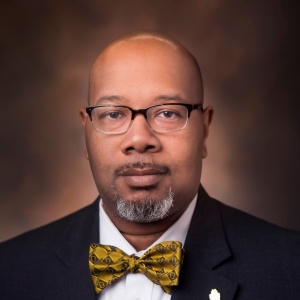
Kelvin Moses, M.D.

Kelvin Moses M.D.

What are some ways we could better celebrate/honor/recognize BHM?

Black History Month began with the efforts of Carter G Woodson to recognize the contributions of Black Americans to American history, many of which go unrecognized or unacknowledged in mainstream history texts.  February was chosen because it was the birth month of Fredrick Douglass and Abraham Lincoln.  What began as a week has expanded to a month.  While this month tends to recycle homogenized quotes from Martin Luther King, Jr., or the same familiar faces, it could be better celebrated by integrating our history into all history year around. It could be better celebrated by not only honoring firsts in the various fields of achievement, but to recognize the struggles it took for that person to get there and succeed, and recognize the current issues that still persist.  We could better honor Black History Month by amplifying the voices of Black women, who still struggle from both racism and patriarchy. Places like Nashville could do so much more to recognize the work done by Diane Nash, Rev. James Lawson and Rev. Kelly Miller Smith that changed the world from right here in our backyard.

What advice do you have for aspiring young black urologists?

Urology is a challenging and rewarding field. It can also be very intimidating being that it is a largely homogeneous and conservative field.  You will have to ignore detractors and obstructionists to attain your goals.  While it may seem there are not many examples to emulate, take a look around the country and reach out to those who inspire you.  I literally cold-called Dr. Willie Underwood and Dr. Isaac Powell based on some of the research they published.  To this day, they serve as mentors and sounding-boards for me as my career has developed.

What are some challenges you faced in your education or training experience?

At every level of my schooling (except for college), there have been self-appointed guardians of privilege who told me that I couldn't succeed if I went to an HBCU, be a doctor, an MD/PhD, a Urologist, a Chief Fellow, a successful attending, etc. For those who have undergone the rigors of medical school and residency, imagine adding this stress and detraction on the stress already built in.  It was through the support of family, friends, and mentors that helped me to succeed.  My time at Morehouse College (the greatest school in the world, and HBCU in Atlanta, GA), gave me the example of Black excellence and allowed me to meet some of the luminaries in medicine, politics and entertainment that walked the same grounds.

What is "race" to you? Do you think race is, or should be, important in today's world? Why or why not?

Race is a social construct, the lens through which every aspect of American life is defined.  There is no biological basis for race, but rather it is a proxy for income, housing, education, policing, medical care, taxation, etc. It is only important in that it defines the outcomes that people experience. Race is not defined by ethnicity or geographic origin, which would be a more reasonable categorization. The negative or apathetic reaction many people have about discussing race (or euphemistically, the "Race Card") is really reticence to acknowledge that race is the absolute linchpin for American society, and until the original sins of the trans-Atlantic slave trade and Native American genocide are recognized and remedied, we are doomed to repeat our mistakes.

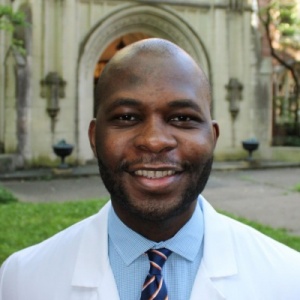
Bola Ayangbesan, M.D.

Bola Ayangbesan, M.D.

What does being a black man mean to you?

Being a black man to me means I get the opportunity to exercise, on a daily basis, various actions that serve to contradict the stereotypes of a black man conjured by most.

Is your cultural identity important to you? Why or why not?

My cultural identity is very important to me because it allows me to be different and it also affords others from varied backgrounds to believe in the fact that they themselves can be successful in their various endeavors without needing to compromise their cultural values. 

What will you tell your children about the concept of race? What will you tell them about being an African American or Black person living in the U.S.?

I never knew I was "black" until I came to the US at the age of 14. I knew I had a dark complexion, but the labeling and classification was a new phenomenon that I have now gotten used to. I'll tell my kids to never let anyone define them based on their race or cultural upbringing. I have encountered several people who qualify their goals and aspirations based on their race. I've also seen a lot of people suffer the unfortunate consequences of implicit bias based on their race.