DBMI Special Seminar: James Cimino, 12/8 at 11AM CST
DBMI Seminar This Week: Spiros Denaxas of University College of London, 12/7/22
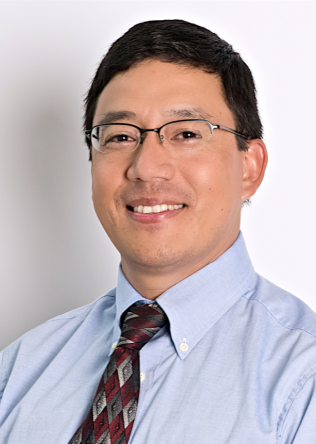
Sean Huang
Carlos Grijalva, MD, MPH, FIDSA
I am a tenured Professor at Vanderbilt University Medical Center in the Division of Pharmacoepidemiology, Departments of Health Policy and Biomedical Informatics. I have appointments as faculty, scholar and/or investigator at the Vanderbilt Epidemiology Center, the Vanderbilt Center for Health Services Research, the Vanderbilt Institute for Global Health, the Vanderbilt Center for Data Science, and the Veterans Affairs Tennessee Valley Geriatric Research Education and Clinical Center (GRECC).
My research interests include the study of acute respiratory infections, the evaluation of medications and vaccines safety and effectiveness, and methodologies for comparative effectiveness research. I am experienced in the conduct of observational studies of medications and vaccination effects, and my research has been focused on influenza pneumococcal infections, SARS-CoV-2, pneumonia, and the evaluation of the effectiveness of vaccination, medications and other preventive programs. My current work is supported by the National Institutes of Health, the Agency for Healthcare Research and Quality, the Food and Drug Administration and the Centers for Disease Control and Prevention, among other sources. I have published more than 290 peer-reviewed articles, many of those in high-impact journals including The New England Journal of Medicine, Lancet, JAMA, Annals of Internal Medicine, Clinical Infectious Diseases, among others. As of January 2023, my publications have accrued more than 23.1 thousand citations to date, with an H-index of 68 and an i10-index of 198 (https://scholar.google.com/citations?user=DGPe_5sAAAAJ&hl=en). According to Semantic Scholar, my work has resulted in 545 highly influential citations (https://www.semanticscholar.org/author/Carlos-Gabriel-Grijalva/4918860).
I am the Co-Principal Investigator for a prospective multicenter case-ascertained study designed to assess the transmission of influenza and SARS-CoV-2 within households in the United States. I am the also the Co-Principal Investigator for a new prospective cohort study of viral infections among adult essential workers in middle Tennessee. I am the Principal Investigator for a new NIH K24 grant that supports mentoring on transmission of viral infections in households. In collaboration with International Investigators, I designed and conducted an international prospective cohort study of young Peruvian children to examine the activity and interactions of common respiratory viruses and colonizing bacteria. Our group has recently finished the field activities of two new studies evaluating the transmission of viruses and bacteria in households in Lima, Peru. I am also the Co-Principal Investigator for the new Vanderbilt PROgRESS (Patient/ Practice Outcomes And Research In Effectiveness And Systems Science) post-doctoral (T32) training program, and I serve as Area Director for the new Vanderbilt Learning Health Systems Scholars (LHSS) K12 training program. I was also the project lead for a new Vanderbilt Trans-Institutional Program (TIPs), focused on the study of environmental drivers of antimicrobial resistance.
I also maintain an active portfolio of teaching and mentoring activities. I serve as the Course Director for Epidemiology I, Protocol Development and Thesis Research in the Vanderbilt Master of Public Health (MPH) program. I designed and served as the Course Director for the School of Medicine PLAN course; an intense 1-month course designed to instruct medical students during the development of a complete research protocol. During the last 10 years, I have had the opportunity to mentor several talented students, postdoctoral fellows and junior faculty. Almost all of them have remained in academia and launched their independent careers. I was elected a Vanderbilt University Chancellor Faculty Fellow in 2017 and into the Vanderbilt Academy for Excellence in Education and Mentorship in 2018. I received the Vanderbilt University John S. Sergent Award for Excellence in Teaching in 2019. I was elected Fellow of the Infectious Disease Society of America (IDSA) in 2019, and I was elected a Member of the American Society of Clinical Investigation (ASCI) in 2020. In 2022, I received a Special ISPE Award for contributions to public health associated with the COVID-19 pandemic from the International Society for Pharmacoepidemiology.
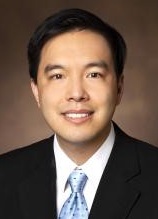
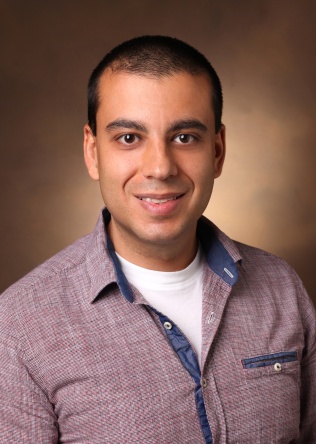
Ivelin Georgiev, PhD
Dr. Georgiev received his Ph.D. in Computer Science from Duke University. In 2009 he joined the newly formed Structural Bioinformatics Core Section at the Vaccine Research Center (VRC) on the main NIH campus in Bethesda, MD, where he served as a staff scientist and co-head until 2015. Dr. Georgiev is now a faculty member at the Vanderbilt Vaccine Center and an Associate Professor of Pathology, Microbiology and Immunology and of Computer Science at Vanderbilt. Dr. Georgiev is the founding Director of the Vanderbilt Program in Computational Microbiology and Immunology.
At the interface of immunology and virology, recent computational advances have allowed us to better understand the interactions between antibodies and antigen, to design immunogens capable of eliciting target antibody specificities, and to optimize antibodies as clinical products. Research efforts in the Georgiev laboratory aim to utilize the power of computation to increase our understanding of fundamental questions in immunology and virology and to develop novel ways of using this understanding to fight diseases. For the translational component of our research, we apply structure-based protein design approaches to the development of new vaccine and antibody product candidates against a number of viruses of biomedical interest.
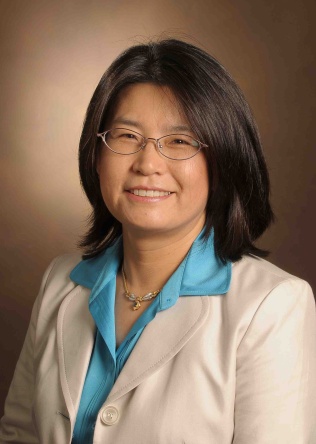
Leena Choi, PhD
https://www.vumc.org/biostatistics/person/leena-choi
PhD, Biostatistics, Johns Hopkins University
Research interests include: constructing a system for pharmacokinetics, pharmacodynamics, and pharmacogenomics studies using electronic health records (EHRs), which would provide the foundation for dose-optimization support system for precision medicine; developing medication dosing extraction algorithms from EHRs, which would also benefit medication-related studies in pharmacoepidemiology
More information: The Choi Lab
Dr. Choi's research interests also include statistical methods for evaluating bioequivalence and biosimilars, clinical trial design, and the foundations of statistical inference. She has been closely working with researchers in clinical pharmacology and doctor of nursing practice (DNP) students at Vanderbilt School of Nursing. Additionally, she has been collaborating with Vanderbilt Specialty Pharmacy for medication adherence research.
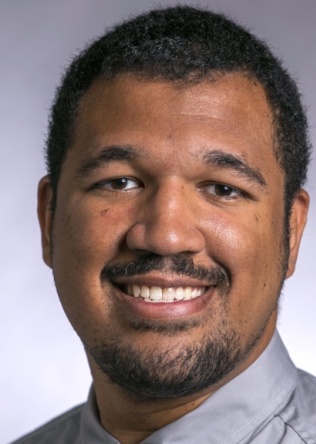
Benjamin Collins, MD, MA, MS
Dr. Benjamin Collins is assistant professor of clinical medicine in the Department of Medicine with a secondary appointment as assistant professor in the Department of Biomedical Informatics at VUMC. He was formerly a postdoctoral fellow in ethics, legal and social issues of artificial intelligence (AI) in health care working with the Biomedical Informatics and Biomedical Ethics departments. He is also a graduate of the clinical informatics fellowship program at Oregon Health & Science University, where he also earned an MS in Biomedical Informatics with a capstone project completed on the development of an online training module for clinicians on algorithmic bias in health care.
Clinically, he is a graduate of the Temple University Hospital internal medicine residency program and practices as a hospitalist. During residency, he also earned an MA in Urban Bioethics from Temple with a thesis on, “A Theory of Sociotechnical Justice in Healthcare.” He is interested in the use of AI to support the functions of clinical decision support and to improve health care and outcomes for all. This includes working to ensure that AI does not contribute to healthcare outcome differences through qualitative research, community engagement, and improving clinician education and training in the use of AI. Outside of informatics he is also interested in medical education, narrative medicine and medical philosophy and is active as a volunteer in AMIA.
In November 2022, Dr. Collins was awarded the 2022 Academic Forum Best Paper Award for his paper "Development of an Online Training Module on Algorithmic Bias in Health Care for Clinicians" at the AMIA 2022 Annual Symposium."
DBMI Seminar & Research Colloquium This Week: Carlos Grijalva on "Viral Infections, Vaccines and Transmission Risk Assessments", "Technology & Society"
Hanna Semega, PharmD, MBA
Fall 2022-Spring 2024
I was born and raised right outside of Pittsburgh, PA and have been in Lexington, KY the last 6 years for school. I attended the University of Kentucky for two years of undergrad, followed by four years of pharmacy school. The last three years of receiving my PharmD, I was also in the evening MBA dual‐degree professional program. The MBA program allowed me to work with all genres of healthcare professionals and gain/respect different perspectives when it comes to business decisions. During those 3 years, I took the liberty to further expand my knowledge by receiving the Project Management and Lean Six Sigma Green Belt certifications through Transplace. Around the time of graduation, I accepted a post‐doctoral fellowship at Omnicell / Wake Forest Baptist Health.
During my advanced pharmacy practice rotations I took a healthcare informatics rotation, where I worked a lot with IT problem solving (i.e. ScriptPro and Epic interfaces), shadowing multiple administration meetings, and completing projects for a UK Clinic to help better standardize their pharmacy practices (updated call sheet, cheat sheet for billing codes, binder for IT tickets). What I am looking forward to the most in the MS‐ACI didactic portion is the chance to understand those interfaces on a more clinical level and appreciate all they can do to help streamline a healthcare facility.
Learn more about the Omnicell-MSACI partnership here.