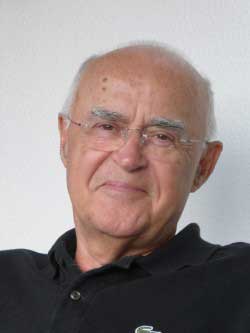
Peter T Loosen, MD, PhD
Contributions to Vanderbilt:
Building, in collaboration with David N. Orth, the only truly psychoneuroendocrinological division in the country designed to study both behavioral change in endocrine disorder and endocrine change in behavioral disorders. VA Chief of Psychiatry: initially bringing the VA Psychiatry service back into the Department of Psychiatry administratively and academically and, later, guiding it through the often difficult VA wide changes. IRB Membership (5 ys). Continued research funding through NIMH, NIAAA, VA Merit Review, and Stanley Foundation grants.
Contributions to the academic world:
Dr. Loosen first described (in 1972) how the combined SD/antidepressant use leads to a rapid and sustained antidepressant response. Similarly, I was involved (at UNC) in using T3 as an adjunct to antidepressants. These data showed how to overcome the delayed onset of action of antidepressants and lead to the development of"augmentation therapies." I also demonstrated that the TRH-induced TSH response may be a useful psychoneuroendocrine marker. At Vanderbilt, David Orth and I demonstrated that (a) major depression is rather common in acute Cushing's disease, but will abate when the hypercortisolism is cured; (b) hypercortisolism is a contributor to the symptoms of major depression, not its cause; ( c) hypercortisolism causes damage to the hippocampal formation (HF), leading to reduction in HF size and cognitive impairment; and (d) reduction of endogenous testosterone levels (using LHRH antagonists) leads to discrete behavioral changes in normal subject. Dr. Orth and I also performed the first serial CSF withdrawal studies (withdrawing CSF every 10 min for up to 48 hs) at Vanderbilt to investigate CRH secretion into (and removal from) human CSF. Editorial board positions: Psychoneuroendocrinology, Pharmacopsychiatry, Neuropsychobiology. Committee memberships: Ethics Committee, Constitution and Rules Committee, and Committee on Public Concerns (all American College of Neuropsychopharmacology); NIMH Study Section; George N. Thompson Award Committee (Society of Biological Psychiatry).