Resident Teaching and Conferences
Our approach to Resident Education
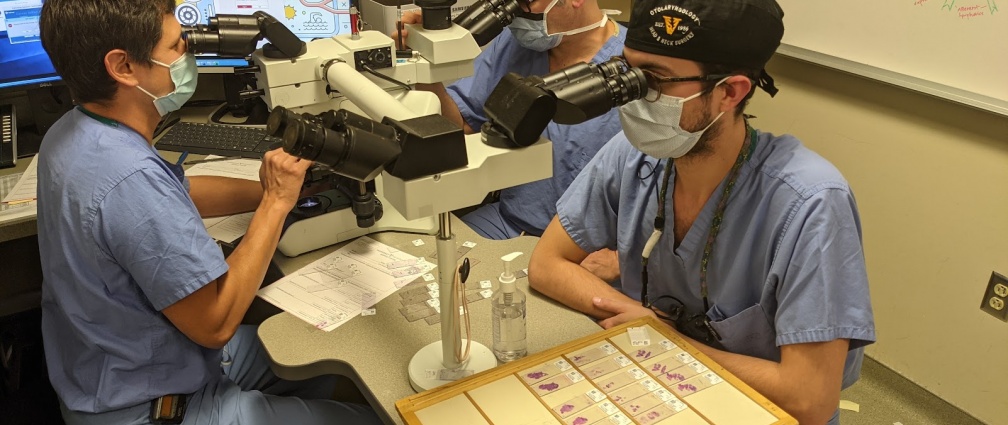
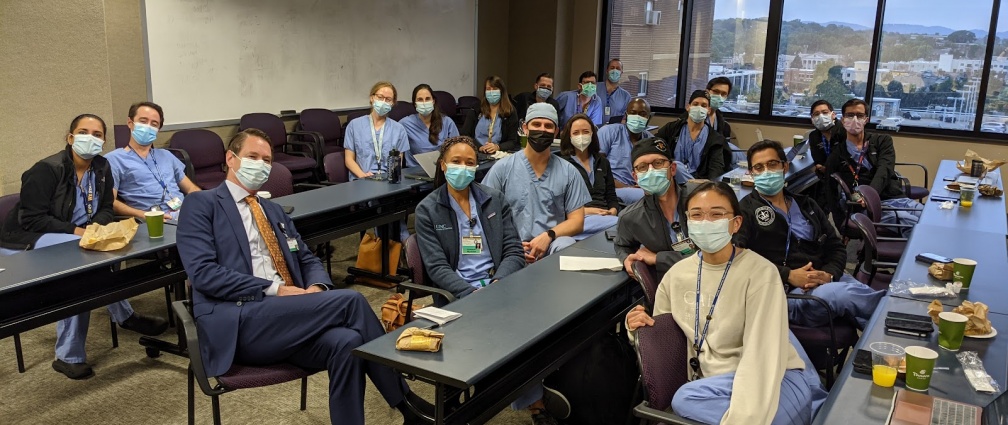
At Vanderbilt, an integral part of our mission is to train the future leaders in Otolaryngology-Head and Neck Surgery. In accordance with this vision, 3 hours per week are dedicated to formal resident teaching - beyond learning that comes with clinical responsibilities. We are preparing you for physician opportunities that do not yet exist.
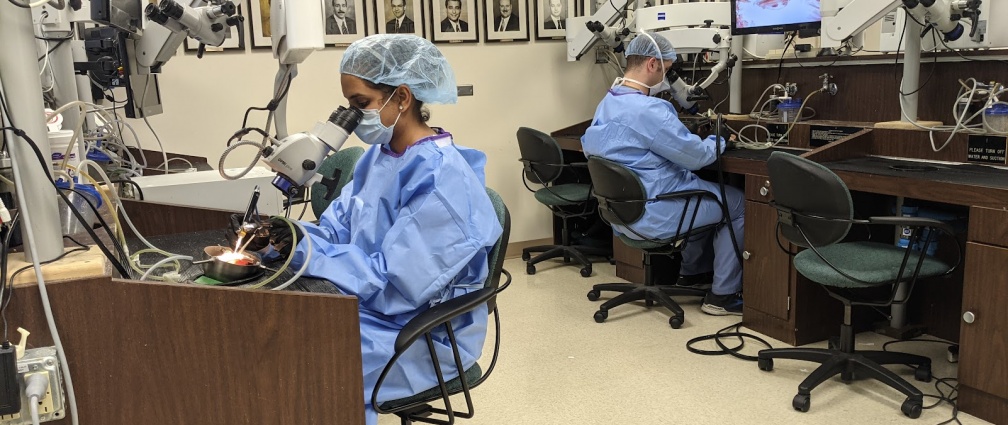
While a portion of these teaching sessions employ lecture-based learning, a significant emphasis is placed on critical thinking and resident-led case-based learning. The framework for teaching sessions comes from Bloom's Taxonomy, a methodology aimed at helping residents systematically acquire otolaryngology knowledge. Learning sessions are supplemented with multiple specialized hands-on training courses.
The department pays for membership in the American Academy of Otolarynogology for all residents, in addition to providing access to the American Academy of Otolaryngology Home Study Course and AcademyU - a vast online educational resource. Paper copies of select journals and annual access to Board Vitals (online board-style questions) are also paid for by the department.
A unique 4-year leadership training program provides residents with a foundation of knowledge and the skills needed to excel in the dynamic world of medicine beyond the clinics and operating room.
Importantly, within the Department of Otolaryngology-Head and Neck Surgery, in addition to the Program Director (Dr. Priyesh Patel), our training program benefits from our Director of Education (Dr. John Seibert), Director of Resident Didactic Curriculum (Dr. Amy Whigham) and Medical Student Clerkship Director (Dr. Ryan Belcher), who have formal training in educational methodology and enhance the teaching experience for residents.
Fellows within the department act as attendings and work closely with residents. They have well-defined roles, entirely augmenting the learning environment, and are a strength of the academic family at Vanderbilt.
Read about our Training Philosophy
Have we accomplished all that we can do to train our colleagues and to educate ourselves for the never-ending race ahead? We can do better. Educational renewal is not just about cleverly using novel pedagogical techniques and new tech tools; as doctors we are, by definition, duty-bound to teach and to lead.
Weekly Resident Teaching Sessions
| Lecture | Day/Time | Description |
| Resident Teaching Lecture | Wednesdays 7:00 - 8:00 am | Didactic lectures led by faculty and researchers. |
| Resident Teaching Conference | Fridays 8:00 - 10:00 am | Resident led teaching sessions with guidance provided by a physician expert on the topic. |
Additional Resident Teaching Courses
| Lecture | Frequency | Description |
| Leadership Training | 4-year program with multiple evening sessions per year | see link |
| Temporal Bone Course | Annual (multiple sessions) | Lecture and temporal bone dissection lab |
| Rhinology Dissection Lab | Annual | Lecture and endoscopic cadaver dissection lab |
| Head and Neck Dissection Lab | Biennial | Head and neck cadaver dissection lab |
| Facial Trauma Workshop | Annual | Lecture and Hands-on plating workshop |
| Facial Plastics Injectables Workshop | Biannual | Lecture and practice with common injectables used in facial plastic surgery |
| Journal Club | Weekly | Critically review research articles relevant to otolaryngologic practice, during Friday resident teaching conferences. |
| Simulation Lab | Biennial | Simulation Lab Training at the Vanderbilt Center for Experimental Learning and Assessment (CELA) |
Department Conferences
Multiple departmental or subspecialty-specific conferences occur on a recurring basis. This includes a weekly departmental Grand Rounds and a quarterly Morbidity, Mortality, and Improvement Conference. Residents are commonly involved in presentation or discussion of topics during these conferences. During head and neck tumor board, which meets weekly, residents are responsible for presenting cases and being an integral part of patient care discussions. While multiple other administrative, educational, and patient-care oriented conferences/meetings occur per year, resident involvement in them is variable.