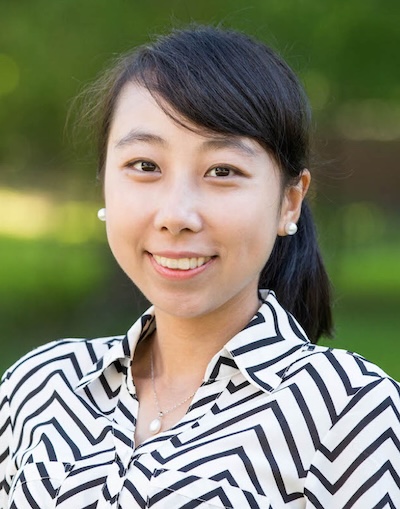
Ruogu Fang, PhD
Professor Fang is a widely recognized researcher whose work advances brain-inspired artificial intelligence models and AI-empowered precision brain health. She recently joined the Vanderbilt School of Engineering from the University of Florida, where she served as an associate professor and Pruitt Family Endowed Faculty Fellow in the J. Crayton Pruitt Family Department of Biomedical Engineering. She is ranked among the top 1 percent of researchers worldwide in image analysis, according to ScholarGPS.
Research Information
Dr. Fang's research addresses fundamental and translational challenges at the intersection of artificial intelligence, neuroscience, and biomedical imaging. Her research vision is centered on AI-empowered precision brain health and brain/bio-inspired AI, with the goal of developing trustworthy AI systems that both advance our understanding of the human brain and transform the prevention, diagnosis and treatment of neurological and
psychiatric disorders.
Her laboratory develops multimodal AI methods that integrate neuroimaging, retinal imaging, electronic health records, genomics and other biomedical data to enable earlier disease detection, predict individualized disease progression and treatment response, and support precision interventions. A major research direction is the development of medical foundation models, agentic AI and digital twins for personalized brain health, including
individualized noninvasive brain stimulation.
Complementing these translational efforts, Dr. Fang investigates how principles of natural intelligence can inspire the next generation of trustworthy, interpretable, and personalized AI. By bridging neuroscience and artificial intelligence, her research seeks to create AI systems that not only improve health care but also deepen our understanding of intelligence itself.
The Smart Medical Informatics Learning and Evaluation (SMILE) Lab develops innovative AI algorithms and computational tools that translate discoveries in neuroscience into clinically meaningful technologies while using insights from the brain to advance the future of artificial intelligence.
She has received continuous funding totaling more than $55 million from agencies including NIH, NSF and AFRL, as well as from industry.
Dr. Fang has published peer-reviewed papers in leading journals and conferences spanning artificial intelligence, medical imaging and neuroscience, including The Lancet Digital Health, JAMA Neurology, Nature Computational Science, Nature Communications, PNAS Nexus, npj Digital Medicine, Medical Image Analysis, IEEE Transactions on Medical Imaging, ICCV and MICCAI. Her research has been featured by major international media outlets including Forbes, The Washington Post, ABC News and National Geographic.
Her contributions have been recognized through numerous honors, including selection as a National Academy of Medicine Victor J. Dzau Emerging Leaders in Health and Medicine Scholar, Rising Star by the Academy of Science, Engineering and Medicine of Florida, the IEEE International Conference on Image Processing Best Paper Award, the University of Florida College of Engineering Faculty Award for Excellence in Innovation, the Faculty Doctoral Dissertation Advisor and Mentoring Award, the BME Faculty Research Excellence and Teaching Excellence Award and the inaugural University of Florida Artificial Intelligence Course Award.
Dr. Fang is passionate about educating and mentoring the next generation of biomedical AI researchers. She created the Medical Artificial Intelligence (MAI) course series and introduced innovative educational approaches that have received university-wide recognition for excellence in AI education and teaching. She has mentored postdoctoral fellows, doctoral students, master's students and undergraduate researchers, many of whom have received prestigious national fellowships, best paper awards, and faculty or research positions at leading academic institutions, medical centers, and technology companies.
Dr. Fang is an active leader in the international medical AI community. She serves as President of Women in MICCAI, Associate Editor of Medical Image Analysis, and has held editorial and leadership roles across multiple journals and international conferences. She regularly serves on NIH study sections and NSF review panels and is committed to advancing interdisciplinary collaboration, inclusive excellence and responsible AI for
health care.
Publications
Santos-Mayo A, Gilbert F, Mirifar A, Tebbe AL, Fang R, Ding M, Keil A. “Concept2Brain: An AI Model for Predicting Neurophysiological Responses to Text and Pictures,” Nature Communications, 2026.
Cox JM, Liu P, Stolte SE, Yang Y, Liu K, See KB, Ju H, Fang R. “BrainSegFounder: Towards 3D Foundation Models for Neuroimage Segmentation,” Medical Image Analysis, 2024.
Khan W, Leem S, See KB, Wong JK, Zhang S, Fang R. “A Comprehensive Survey of Foundation Models in Medicine,” IEEE Reviews in Biomedical Engineering, 2025.
Leem S, Yang Y, Woods AJ, Fang R. “Prediction of Alzheimer’s Disease Risk Factors from Retinal Images via Deep Learning: Development and Validation of Biologically Relevant Morphological Associations in the UK Biobank,” Journal of Alzheimer's Disease, 2026.
Albizu A, Indahlastari A, Huang Z, Waner J, Stolte SE, Fang R, Woods AJ. “Machine-Learning Defined Precision tDCS for Improving Cognitive Function,” Brain Stimulation, 2023.