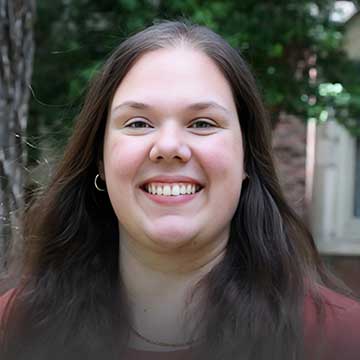
Monica E. Brown is a Ph.D. candidate in the Cell and Developmental Biology Graduate Program at Vanderbilt University and a trainee in the laboratory of Ken S. Lau, Ph.D. Her research focuses on understanding cellular plasticity and the mechanisms that drive cell-state transitions within the intestinal epithelium, with particular interest in how developmental programs shape specialized cell populations. In the study “Pancreatic islet β-cell subtypes are derived from biochemically-distinct and nutritionally-regulated islet progenitors,” Brown contributed to research examining how distinct islet progenitor populations give rise to functionally different β-cell subtypes and how those differences are influenced by maternal nutrition. By integrating in vivo models with single-cell and epigenetic approaches, her work helps uncover the regulatory logic that governs endocrine cell differentiation, function, and disease susceptibility. (Nature)
An interview with
our scientist:

Learn more about
Monica's research

In a nutshell, what do you study?
I study how different subtypes of pancreatic islet beta cells are formed and how they respond to disease conditions over time.
What is your research about?
My work focuses on understanding how pancreatic islet beta cell subtypes are derived from biochemically distinct and nutritionally regulated progenitors. These subtypes can be used to study disease states like maternal high-fat diet exposure and type 2 diabetes, and how those conditions impact cells across the lifespan.
Why is your research important?
This research helps us understand how beta cell subtypes change in response to disease. By studying shifts in the methylome and transcriptome, we can identify potential therapeutic targets and better understand long-term disease risk. This work may also help guide preventative strategies, such as nutritional recommendations for expecting mothers, to reduce future health complications.
What is one topic in your field that excites you right now?
I’m really excited about emerging approaches in beta cell therapy, particularly research showing that pancreatic beta cells can be transplanted into the forearm to produce insulin. This offers a less invasive alternative to traditional procedures and could help prevent transplant rejection while still effectively regulating blood sugar.
What drew you to science?
I love that science feels like solving a puzzle where you might be the first person to find the answer. That sense of discovery is what keeps me motivated.
What is one piece of advice you would give to a new graduate student?
Don’t let self-doubt stop you from pursuing opportunities. Always ask questions and go after what you want. The worst you can hear is no, but a yes can open so many doors.