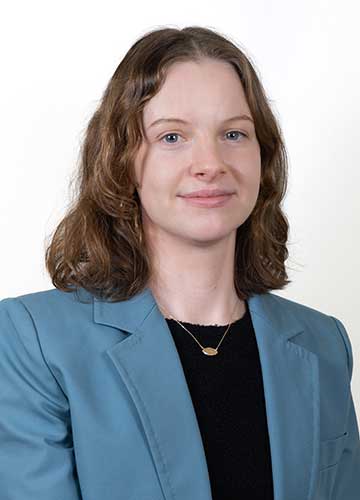
Audrey Thomas is a Microbiology and Immunology Postdoctoral Fellow in the laboratory of D. Borden Lacy, PhD, at Vanderbilt University Medical Center. Her research focuses on developing mucosal vaccines and therapeutics against Clostridioides difficile, with a broader interest in understanding T cell-mediated mucosal immunity and advancing vaccine strategies for difficult-to-target pathogens. In the study “Mucosal vaccination clears Clostridioides difficile colonization,” Thomas contributed to research exploring how targeted mucosal immune responses can eliminate persistent colonization by C. difficile. Her work integrates immunology, vaccine development, and structural biology approaches, including spectral flow cytometry and cryo-electron microscopy techniques, to better understand host-pathogen interactions and improve next-generation vaccine design.
An interview with
our scientist:

Learn more about
Audrey's research:

In a nutshell, what do you study?
I study vaccines for Clostridioides difficile (C. difficile), focusing on how mucosal vaccines can target both the toxins and surface proteins of the bacterium to promote clearance and reduce disease severity.
What is your research about?
My research focuses on developing mucosal vaccination strategies against Clostridioides difficile. In our study, “Mucosal vaccination clears Clostridioides difficile colonization,” we found that administering the vaccine intrarectally generates a localized immune response in the colon, where the bacterium resides. We also discovered that clearance depends on a fecal IgG response, which differs from the typical IgA response associated with mucosal vaccines, and that vaccination generates tissue-resident memory T cell responses against C. difficile spores.
Why is your research important?
C. difficile infection impacts more than 500,000 people in the United States each year and causes tens of thousands of deaths. Many patients also experience recurrent infections, which creates both a personal and economic burden. This research helps us better understand how to generate a strong immune response capable of clearing the bacterium and preventing severe disease, which could lead to more effective vaccines and reduce unnecessary suffering.
What is one topic in your field that you are excited about right now?
I’m especially excited about the growing understanding of mucosal immunity and tissue-resident immune responses. Learning how localized immune responses in the gut can prevent recurrent infections opens new possibilities for designing vaccines that are more targeted and effective against gastrointestinal pathogens.
What drew you to science?
When I was younger, I originally thought I wanted to go into art, even though I’m actually terrible at it. My brother became an artist and movie producer, and while we both grew up with a strong creative energy, I found my creativity through science. I love that research allows me to think creatively while solving complex problems.
What is one piece of advice you would give to a new graduate student?
Be patient with yourself and stay curious. Research can be challenging, but every setback teaches you something valuable. Don’t be afraid to ask questions or think creatively when approaching a problem.