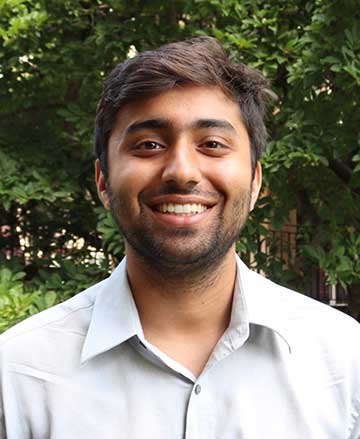
Yash Pershad is an MD–PhD student in the Human Genetics Graduate Program at Vanderbilt University and a trainee in the laboratory of Alexander G. Bick, MD, PhD. His research focuses on understanding how inherited genetic variation shapes the development of clonal hematopoiesis, a condition in which blood stem cells acquire mutations that allow certain clones to expand over time. In the study “Inherited resilience to clonal hematopoiesis by modifying stem cell RNA regulation,” Pershad contributed to research examining how germline genetic factors can influence stem cell RNA regulation and protect against the expansion of mutated blood cell clones. By integrating population genetics with single-cell transcriptomic approaches, his work helps uncover how inherited variation can modulate disease risk and resilience in aging blood systems.
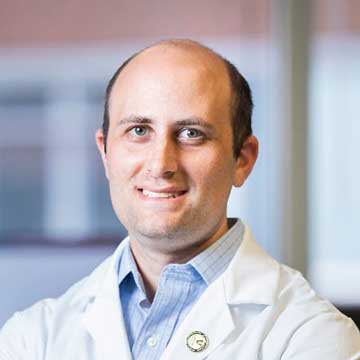
Alexander Bick, MD, PhD, is Director of the Division of Genetic Medicine and Clinical Pharmacology in the Department of Medicine at Vanderbilt University Medical Center and a physician-scientist whose research focuses on the genetic basis of human disease. His laboratory studies clonal hematopoiesis, a condition that becomes increasingly common with age and is associated with elevated risk for blood cancers and cardiovascular disease. In the study “Inherited resilience to clonal hematopoiesis by modifying stem cell RNA regulation,” Dr. Bick and collaborators investigated how inherited genetic variants can alter stem cell RNA regulatory pathways to reduce the likelihood that mutated blood cell clones expand. By combining human genomics, population genetics, and functional studies, his work aims to identify the biological mechanisms that drive clonal hematopoiesis and to inform strategies for preventing or treating age-associated diseases linked to this condition.
An interview with
our scientists:

Learn more about
their research:

Can you introduce yourselves and your roles?
Yash Pershad: My name is Yash Pershad, I'm MDPHD student in Alex Bick's lab in the Division of Jack Medicine, Clinical Pharmacology in the Department of Medicine at Vanderbilt.
Alexander Bick: My name is Alex Bick, I'm the Director of the Division of Genetic Medicine and Clinical Pharmacology in the Department of Medicine at Vanderbilt.
What do you study?
YP: We study how somatic mutations in the blood lead to disease and what and how your inherited genetics interact with those mutations you acquire over time.
AP: I grew up in a musical household. My father is a music minister and my mother is a music teacher. I wanted to be a musician when I grew up because that was (and still is) a huge passion of mine.
What is the title of your paper?
AB & YP: “Inherited resilience to clonal hematopoiesis by modifying stem cell RNA regulation”
What is the significance of your work?
YP: A lot of the mutations you acquire with age can cause disease, and we're interested in studying how that happens and if we can use Human Genetics to find targets that could potentially intercept the progression to cancer or cardiovascular disease.
What are you most excited about in the field right now?
AB: Over the past decade, our ability to sequence the genome has just expanded an unprecedented scale. People in my lab have the ability to access and analyze data from more than one and a half million people's genomes connected to the health record. So we're really excited to understand links between genetics you're born with, mutations that you acquire, and these diseases.
Fun Question: When you what five, what did you want to be when you grew up?
YP: So when I was five, I was really interested in becoming a garbage truck driver. And I thought that that was really exciting because I would stand outside my window every day. And I was just really enamored by how the lover worked, how the schedule worked, and all those things.
AB: Remember when I was 5, a lot of my friends wanted to be firemen, but I thought that was really boring. What was exciting was the actual fire truck. So when I was five, I really wanted to be a fire truck.
What drew you to science?
YP: When I grew up, I was really interested in a medicine and advancing and helping other humans and helping stop disease due to some individuals in my family. But then I realized that science would be an amazing way to scale that impact and help advance human health for many people. Ultimately, I couldn't choose between both of them so that I decided to pursue an MD PhD where I can see patients and also do science to, to advance the frontier of, of how we're treating human health.
What advice would you give to aspiring scientists?
YP: Yeah, I think staying curious would be the advice I give to new grad students. Staying curious, reading the literature and, and seeing what's out there and sort of being inspired to then try new things and take on new projects. And if you, you know, if you show up excited to lab every day, excited to learn, excited to learn from others and learn from the literature, you can take that inspiration and try to discover new things. So that'll be my advice.
AB: The network, the community that you build is so important. It's so important to support you through the ups and downs of Graduate School. And it's also so important scientifically that there's trainees in my lab who go off and talk to their friends who are experts in particular area, and they bring back ideas that I would never have thought of by myself.