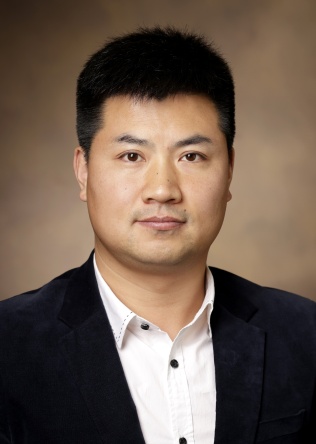
Zhijun
Yin
PhD, MS, FAMIA
Associate Professor of Biomedical Informatics
Associate Professor of Computer Science
Associate Professor of Electrical and Computer Engineering
2525 West End
Suite 1400
Nashville
Tennessee
37203
zhijun.yin@vumc.org
Dr. Zhijun Yin has a broad background in Computer Science and Biostatistics, with a particular focus on data-intensive computing system, natural language processing (NLP), machine learning, statistical inference, and their applications in health domain. Dr. Yin’s current work centers on utilizing electronic health records (EHRs) and non-clinical data source, such as social media, to model and predict health-related behaviors and outcomes. As the recipient of a prestigious NCI R37 MERIT award (an R01 with two additional years of support), he investigates the prediction of anti-cancer medication discontinuation through patient portal messages and structured EHRs. He is now co-leading an ARPA-H funded project that focusing on detecting hallucinations in medical chatbots. He also leads an AHA-supported project focusing on using conversational LLMs to process and understand heart failure outcomes from millions of patient records. He contributes as a co-investigator on several NIH-funded projects, including AIM-AHEAD and Bridge2AI, where he focuses on developing prediction models and addressing issues of bias and fairness in AI within healthcare. Dr. Yin’s other recent research areas include but are not limited to velopharyngeal dysfunction prediction, multi-modal AI in breast cancer prediction, LLM-based text-to-SQL system, and deep genomics.
In addition to his research, Dr. Yin designed and teaches a course titled “Machine Learning and Natural Language Processing for Healthcare” for senior undergraduates and graduate students in Computer Science, Data Science, and Biomedical Informatics at Vanderbilt University. Dr. Yin currently serves as an associate editor for the Journal of Medical Internet Research (JMIR) and JMIR AI and a senior program committee member for multiple peer-reviewed conferences in Computer Science and Biomedical Informatics. Dr. Yin also serves as a reviewer in NIH study sections and PCORI review panels. Dr. Yin has been honored as a fellow of the American Medical Informatics Association (FAMIA) since November 2023.