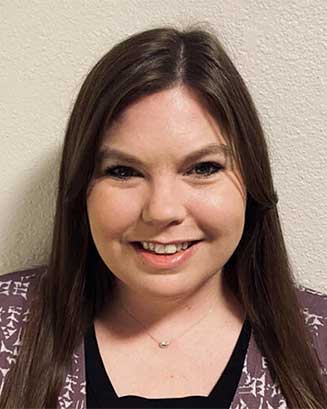
Hi. My name is Sarah Worthan and I'm a postdoc in Megan Beringer's lab in the Department of Biological Sciences.
Bacteria inhabit a wide array of habitats and often transition between open environments and host-associated environments. The stresses that they encounter are very different between these environments, such as the type of resources available and the pH in the environment. Being able to quickly sense and react to these changes is important to their survival, and we're interested in how bacteria navigate these different environments.
To answer this question, we evolved E. coli in culture tubes to 100-day starvation intervals. When E. coli age in this broth, they excrete waste products that make it more alkaline. This means they not only have to contend with changes in nutrients but also changes in pH.
After the evolution, we sequenced the populations and found that nearly half of the populations contained mutations in a gene called rho.
Many bacteria use the rho protein to regulate their gene expression, which is how they respond to their environment. When rho is functional, symbolized as a Pac-Man symbol, it stops the gene expression machinery from producing downstream genes by cutting RNA at pre-designated stop signals. However, in a situation as when a mutation arises that prevents rho from completing this activity, the gene expression machinery continues and it leads to the expression of novel genes.
For this study, we investigated the rho R109-H mutation and how it affected rho activity.
We found that, in vitro, as we increased the pH of the environment, that the mutant rho activity dropped. However, this experiment was performed in a test tube and not within the cell, so we were interested in understanding how the mutation affected intracellular pH.
We found that when the mutation is by itself, there were no changes in how the intracellular pH responds to changes in environmental pH, but when combined with an additional mutation in a gene called YDCI related to pH homeostasis, cells maintained an increased intercellular pH. This means that together, these mutations make the cell more responsive to shifts in environmental pH by lowering rho activity and altering gene expression.
We also identified this mutation in microbes isolated from natural alkaline environments, including both medically and ecologically important bacterial species.
Our next steps are to understand what novel genes are revealed by the rho mutant and how these changes in gene expression are helping bacteria to change their behavior in response to changes in their environment.
So, stay tuned.

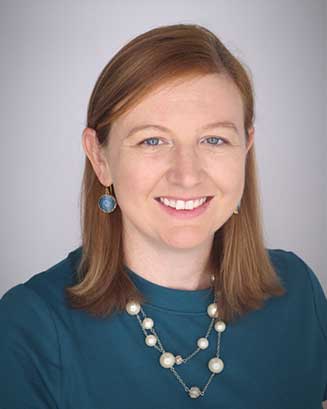
Megan Behringer: I'm Megan Behringer. I'm an assistant professor of biology.
Sarah Worthan: And I'm Sarah Worthan, and I'm a postdoc in Megan Behringer's lab.
What does your lab study?
MB: Our lab is interested in the genetic architecture that underlies how bacteria adapt to novel conditions.
Why is this research important?
MB: Bacteria don't have brains, they don't have eyes, they don't have ears. And so the way that they sense their environment is quite different than the way that we sense our environment. We know that our gut has different pHs, different oxygen levels, and to be able to connect those environmental cues to even the resources that are around allows bacteria to adapt rapidly.
What is the title of your paper?
SW: "Evolution of pH-sensitive transcription termination and E. coli during adaptation to repeated long-term starvation."
What were your research findings?
MB: We were evolving these bacteria under these nutrient-limited conditions and the major adaptive change that occurred was actually a pH-sensing change.
SW: We found that there were two mutations that were co-occurring and populations that were adapted to this repeated long-term starvation. When you put them together, it gives this novel pH-sensing ability and their ability to kind of take a cue from the environment and then modify their behavior in response.
What was it about science that drew you to it?
MB: I like to problem solve, I think. And when I got into science really deeply, I started out as a biomathematician doing biology to computers. And I loved that because I got instant feedback, and you were writing scripts and we were working with DNA sequences during the genomic era, right? We just sequenced the human genome. All of it's so exciting. That's the kind of stuff that was, like, taking that really big digital age that as a millennial I kind of grew up in, and then merging with the biology and all the cool biology that was happening at that time.
SW: Knowing that humans have been on this earth for tens of thousands of years, and knowing that I could be at the bench, put certain conditions together and possibly be the first person to ever observe some natural phenomena is just amazing to me.
What is one of your biggest challenges as a researcher?
SW: I think for me it's, you know, misconceptions in science, thinking that you just kind of follow directions like a recipe and everything kind of magically comes together. But when you actually get to the bench and you do the experiments, they often fail the first time around. And so you have to tweak things and change things. That can get frustrating. And I feel that you have to be really resilient in that matter.
What advice do you have for future graduate students?
MB: I think relax a little bit. There's so much to be strung out about right now, right? We understand that. Like, you know, what you're going to be after you graduate graduate school, things like that. But graduate school to me was such a special time. It's this really protected time where you get to learn what you want to learn. Everything's an open book right now. And you don't even have to study in your postdoc what you are doing in graduate school, right? Pick up skills, meet people in the scientific community, and just enjoy it.