How a secretive Pentagon agency seeded the ground for a rapid coronavirus cure
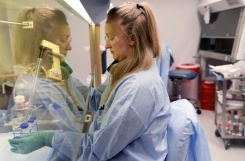
The scientists were working through the night over a weekend in February in their Vancouver offices, running a blood sample from an early American covid-19 survivor through a credit card-sized device made up of 200,000 tiny chambers, hoping to help save the world. Their mission was part of a program under the Pentagon’s secretive technology research agency. The goal: to find a way to produce antibodies for any virus in the world within 60 days of collecting a blood sample from a survivor.

Research team isolates antibodies that may prevent rare polio-like illness in children linked to a respiratory infection

Researchers at Vanderbilt University Medical Center, Purdue University and the University of Wisconsin-Madison have isolated human monoclonal antibodies that potentially can prevent a rare but devastating polio-like illness in children linked to a respiratory viral infection. The illness, called acute flaccid myelitis (AFM), causes sudden weakness in the arms and legs following a fever or respiratory illness. More than 600 cases have been identified since the U.S. Centers for Disease Control and Prevention began tracking the disease in 2014.

Antibodies eye Pacific Island “fever”

Ross River fever is a mosquito-transmitted disease endemic to Australia and surrounding Pacific Islands. There is no specific treatment or vaccine for Ross River virus (RRV) infection, which causes rash, fever and debilitating muscle and joint pain lasting three to six months. 

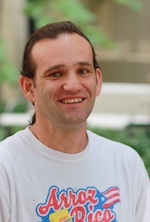
Elad Binshtein

Elad
Binshtein
Associate Basic Scientist

Dr. Binshtein received his M.S. in Biochemistry, and doctorate in Biochemistry and structure biology in
2010 from Ben Gurion University of the Negev, Beer Sheva, ISRAEL. The PhD work was on the
structure function of Glyoxylate Carboligase using X-ray and biochemical methods. After graduation
Dr. Binshtein was moved to the US for a postdoc in the lab of Dr. Ohi in Vanderbilt University where
he got trained on a electron microscope (EM) methods. In this position his work was focused on macromolecule complexes and toxin structure function using cryo-EM.

In 2017 Dr. Binshtein start to work at the Vanderbilt cryoEM facility (V-CEM) under the CSB as a
Cryo-EM specialist senior staff scientist. In this position he work and collaborated with multiple labs at
Vanderbilt University and on multyple EM projects. He also implemented automation in the data
collection and data pre-proccesing in the facility.


In 2019, Dr. Binshtein joined Dr. James Crowe’s lab at VVC as a senior staff scientist. He is currently
working on structural characterization of antibody antigen interactions in different systems like viruses
and toxins.

elad.binshtein@vanderbilt.edu

Analysis of a Therapeutic Antibody Cocktail Reveals Determinants for Cooperative and Broad Ebolavirus Neutralization

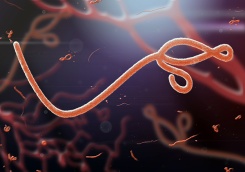
Structural principles underlying the composition of protective antiviral monoclonal antibody (mAb) cocktails are poorly defined. Here, we exploited antibody cooperativity to develop a therapeutic mAb cocktail against Ebola virus. We systematically analyzed the antibody repertoire in human survivors and identified a pair of potently neutralizing mAbs that cooperatively bound to the ebolavirus glycoprotein (GP). High-resolution structures revealed that in a two-antibody cocktail, molecular mimicry was a major feature of mAb-GP interactions.

Two is Better Than One: Combatting the Ebola Virus

Many people associate Ebola with the previous viral epidemic of the last decade, but, especially in light of the current global SARS-CoV-2 pandemic, few are aware that there is currently an active outbreak occurring in the Democratic Republic of the Congo. This deadly virus continues to wreak havoc in Africa, where containment of the virus fluctuates as new cases are reported.