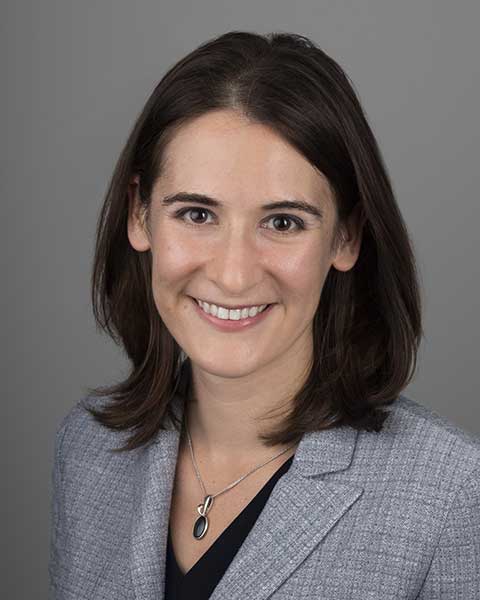
Katherine Van Schaik
Dr. Katherine Van Schaik earned her PhD in Ancient History from Harvard University’s Department of the Classics and her MD with Honors from Harvard Medical School. Her scholarship bridges the ancient and modern worlds, focusing on disease, healing practices, and medical decision-making across Greek, Roman, and Islamic traditions. She employs interdisciplinary methodologies that integrate historical and textual analysis with scientific investigation, including bioarchaeology, paleoradiology, and emerging techniques for studying ancient human remains. Her work also engages broadly with medical humanities and anthropology, exploring how historical perspectives inform contemporary understandings of health, illness, and care. In addition, Dr. Van Schaik brings an ethical lens to her research, addressing questions of medical decision making and medical ethics and responsibility in both historical contexts and modern clinical practice.
I am an Assistant Professor of Radiology and Radiological Sciences, with a focus on Musculoskeletal Imaging, at Vanderbilt University Medical Center as well as an Adjoint Assistant Professor of Classical and Mediterranean Studies (https://as.vanderbilt.edu/classical-mediterranean-studies/bio/katherine…) and an Assistant Research Professor in Electrical and Computer Engineering at Vanderbilt University.
I completed my residency in diagnostic radiology at Beth Israel Deaconess Medical Center (Harvard Medical School), selected by the American Board of Radiology as a participant in the Holman Research Pathway and by the US Society of Skeletal Radiology as an inaugural resident-scholar. In addition, I am a postdoctoral research affiliate of the Initiative for the Science of the Human Past at Harvard, an affiliate of the Centre for Human Bioarchaeology at the Museum of London, and a consultant paleoradiologist for the Juvenile Mummy Project. Previous research affiliations include the Institute of Evolutionary Medicine at the University of Zurich, the Harvard Center for Global Health Delivery - Dubai, and the Western Australia Centre for Rural Health.
Currently, I am the PI for a US National Science Foundation Senior Investigator Grant evaluating correlations between epigenetic modification of genes implicated in skeletal health, and imaging findings, in three different cohorts: a modern clinical cohort, a modern postmortem cohort, and a historical cohort (19th century sailors from the British Royal Navy). This work is also funded by the Society of Antiquaries of London and the Archaeological Institute of America.
I have trained in the United States, Europe, Australia, and the Middle East as a classicist, historian, bioarchaeologist, and physician. I hold an AB in Classics and Molecular and Cellular Biology, Summa cum Laude, from Harvard College, and, as a Harvard Knox Fellow, I earned a Master's degree with Distinction in Classical Art and Archaeology from King's College, University of London. Undertaking an integrated PhD MD program at Harvard University, I earned a second MA (in Ancient History) and a PhD in Ancient History under the auspices of the Harvard Department of the Classics, and my MD with Honors from Harvard Medical School, where I trained at Beth Israel Deaconess Medical Center, the Brigham and Women's Hospital, the Massachusetts General Hospital, and Mt. Auburn Hospital. Besides Latin and ancient Greek, I have studied classical and modern Arabic in the US, Morocco (as a US Department of Education Foreign Language and Area Studies award recipient), and the UAE.
My first book, published in January 2024 with Princeton University Press' Ancient Wisdom for Modern Readers series, is entitled, "How to Be Healthy: An Ancient Guide to Wellness. Excerpts from Galen." I discuss the book further in this podcast.
My second book project, entitled, "Decision is Difficult: A History of Medical Decision Making in Greco-Roman Antiquity," is under contract with Johns Hopkins University Press and focuses on systems of disease classification, the development of expert intuition, the changing definition of disease over time, and the development and evolution of medical education (especially in the Greco-Roman world from 500 BCE to 200 CE). Additional significant research projects involve the imaging and epigenetics of osteoporosis, bone aging, ancient DNA studies, and longevity, as well as methodological development in the field of bioarchaeology using the tools of radiology.